How do you prefer a handyman to price a list?
No votes yet. Yours will be the first. · saved on this device
Loading...
Home Repair Scopebook · General Home Repairs cost guide
A general repair visit in 2026 costs roughly $60 to $125 an hour before materials, per HomeAdvisor, with a most common minimum of $130, per Fixr. A one-or-two-task visit averages about $390 to $406; a half-day list of two to five hours runs about $316 to $428 and a full day $701 to $1,105, per Thumbtack. Parts, markup and trip fees come on top.
General repairs are priced by time, and the time is set by the list. A door that needs a hinge screw tightened takes minutes; a door that needs rehanging after the frame shifted can take an hour or more. The cost table on this page gives published per-task and per-visit ranges; this guide explains how to turn those ranges into a budget for your own list, and where the money actually goes.
The approach is simple: estimate hours, price them at your market's rate, add the fixed charges, then add materials. The handyman calculator runs the same arithmetic. The sections below explain each input, show three sample budgets, and set out what to cut first if the total is higher than you hoped.
| Item | Low | High | Unit | Notes |
|---|---|---|---|---|
| Hourly labor, standard hours | $60 | $125 | per hour | HomeAdvisor 2026; Thumbtack national average $60–$75 |
| Minimum visit charge | $75 | $200 | flat | Fixr most common $130; may be a higher first hour |
| Half-day bundle (2–5 hours) | $316 | $428 | flat | Thumbtack 2026 multi-project visits |
| Full-day visit | $701 | $1,105 | flat | Thumbtack 2026 complex full-day jobs |
| Wall hole repair | $125 | $175 | per repair | Fixr 2025 standalone |
| Door, window, or fence repair | $125 | $200 | per repair | Fixr 2025 standalone |
| Material pickup trip fee | $30 | $80 | flat | HomeGuide 2026 |
| Emergency or after-hours labor | $90 | $200 | per hour | Fixr 2025 |
Start with the national center and adjust. Thumbtack's marketplace data centers on $60–$75 per hour, and Fixr's most common rate is $65/hr. HomeAdvisor's full range, $60–$125 per hour, reflects geography more than skill. Thumbtack's low end of $45 to $50 describes small, lower-cost markets; its high end of $100 to $125 describes expensive metros.
If you have hired a handyman locally before, their rate is the best input. If not, a single phone call asking for the hourly rate and minimum charge gives you both numbers in a minute. Use the rate for planning, not negotiating; the total for your list will depend more on the hours and the fixed charges than on a few dollars' difference in the rate.
Assign each task a time in quarter hours, then add a small allowance for setup, cleanup and moving between rooms. One way to estimate is to divide a published task price by a typical rate: HomeAdvisor's task list, $65–$300, implies roughly an hour for a hall light and two to four hours for a kitchen sink at common rates. Fixr's door, window or fence repair band of $125 to $200 implies one to two hours.
Add drying or curing time only if it forces a return visit. A drywall patch that needs a second coat, caulk that must cure before painting, or adhesive that must set are the usual causes. If the pro can work on other tasks while something dries, the wait costs nothing; if the list is too short to fill that gap, the return trip does.
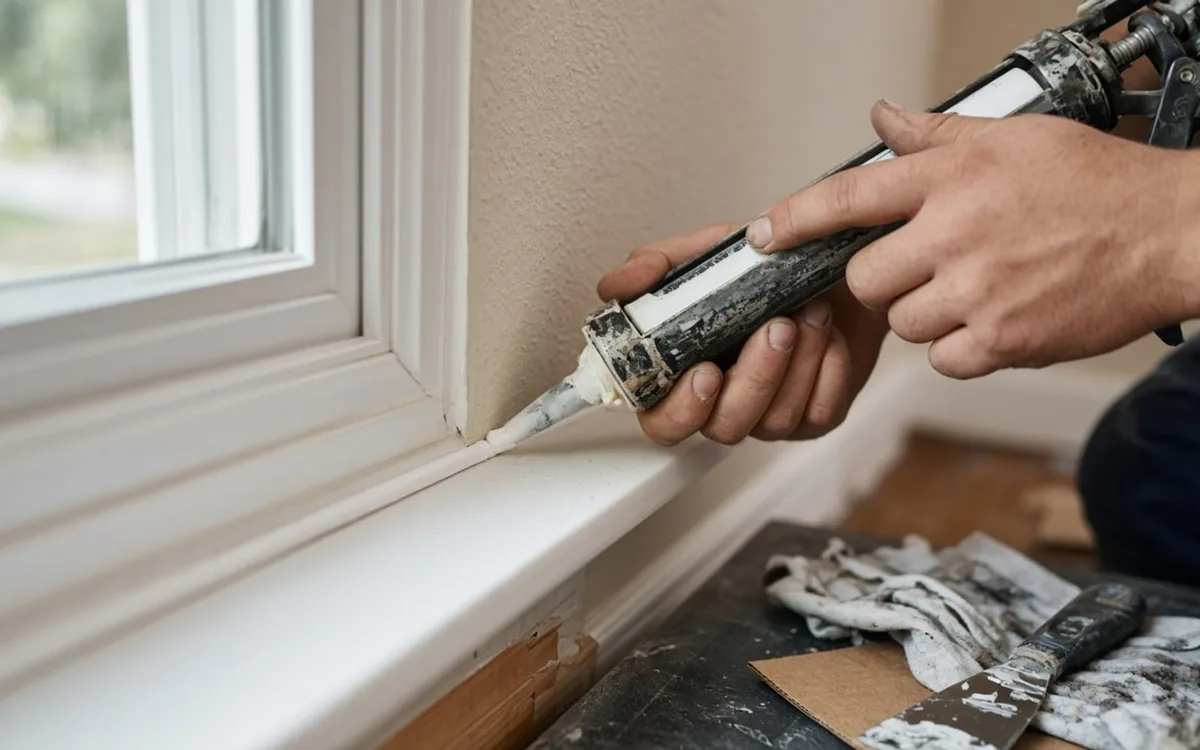
Three fixed charges sit alongside the hours. The minimum: HomeGuide reports $75–$200, and Fixr's most common is $130. It matters only when the list is short, since longer visits exceed it. The trip fee: HomeGuide's $30 to $80 for a mid-job store run, which you can avoid by having parts on site. And mileage outside the pro's normal area, which HomeGuide puts at $0.30 to $0.60 per mile.
Debris removal is the fourth, and it is easy to forget. Old fixtures, doors, packaging from several flat-pack boxes and damaged drywall all need to go somewhere. Some pros include small amounts; others charge for bulky items. Ask, and if you can take recyclables and packaging yourself, say so on the request.
On a typical general repair list, labor is the larger share, because the tasks are short and the consumables are inexpensive. Hinges, strike plates, weatherstripping, caulk, shims and fasteners rarely add much. The balance shifts when the list includes products: a new door, a lockset, a light fixture or a faucet can cost as much as the labor to install it, or more.
When the pro buys those products, Angi reports a markup of 10–30%, plus their shopping time. On a list with several fixtures, buying them yourself can trim the bill noticeably; on a list of repairs with only consumables, the markup is small and not worth the effort of sourcing yourself. The calculator's material tiers let you model both.
Apply Thumbtack's published rate bands to a four-hour list and the regional spread becomes concrete. At the low end, $45 to $50 an hour, four hours of labor comes to about $180 to $200. At the national center, $60 to $75, it is about $240 to $300. In expensive metros at $100 to $125, it is about $400 to $500. The list and the work are identical; only the market has changed.
Fixed charges narrow the gap slightly, because minimums and trip fees vary less than hourly rates, but they do not close it. If you live in a high-cost market, bundling matters even more, since each hour saved is worth more. If you live at the edge of a service area, ask about mileage before booking. The handyman quiz includes questions on regional pricing if you want to check your assumptions.
The budgets below use a mid-market rate of about $75 an hour, within the published ranges, and exclude major products the homeowner supplies. A short list is dominated by the minimum and a long list by the hours, so the per-task cost falls sharply as the list grows.
Compare your list to the closest example and adjust for your market rate and complexity. An older house, a list with diagnostic items or a high-cost metro moves each example up; a list with photos, parts on site and grouped tasks moves it down. If your list falls between two examples, price it at the larger one until a written estimate arrives, since lists tend to grow once a pro is in the house.
| Sample list | Estimated hours | Planning budget |
|---|---|---|
| Two small tasks: tighten hinges, replace a door stop | Under 1 | Minimum charge, roughly $75 to $200 |
| Six tasks: doors, caulk, weatherstrip, two fixtures, a patch | About 4 | Half-day band, roughly $316 to $428 plus parts |
| Twelve tasks across the house in priority order | About 8 | Day-rate band, roughly $701 to $1,105 plus parts |
Timing moves cost in two ways. Urgent or after-hours work carries a premium: Fixr reports $90 to $200 an hour for emergency calls. Deferral also costs, because small problems grow. Angi's State of Home Spending report found households spent $1,143 on emergency repairs in 2025 on top of $2,041 in maintenance, and the emergency line is the one that bundled, scheduled visits shrink.
Booking ahead in a quieter season can help. The Bureau of Labor Statistics projects steady demand for maintenance and repair workers, and good pros are often booked one to three weeks out in spring. Flexible timing, such as accepting a fill-in slot between other jobs, can sometimes secure a lower minimum or faster start.
Cut in this order. First, remove anything cosmetic that you could DIY, such as painting, hardware swaps and caulk in dry areas. Second, defer anything that is not getting worse, such as a squeaky door or a wobbly shelf. Third, buy the products yourself if the pro was going to source them. Keep anything involving water, safety or security, because those grow more expensive when postponed.
Do not cut the approval cap or the preparation. A tight budget with no cap for surprises tends to produce a larger invoice, not a smaller one. The DIY versus handyman comparison helps decide which items to take on yourself, and the full cost guide covers the hidden fees in more detail.
By the numbers
Planning figures from published U.S. sources; every card links to where the number came from.
$60–$75 per hour
Thumbtack's national average handyman hourly rate
Thumbtack's marketplace data centers on $60 to $75 nationally, with a low end of $45 to $50 in small markets and $100 to $125 in expensive metros. The ends describe places, not better or worse pros.
Thumbtack, Handyman Hourly Rates and Price List (2026)$130
most common handyman minimum charge, per Fixr
The minimum is payable even if a job takes forty minutes. It is the strongest argument for bundling: one minimum spread across six tasks costs a fraction of six separate calls.
Fixr, How much does it cost to hire a handyman? (2025)$75–$200
typical handyman minimum charge; material trip fees add $30–$80
HomeGuide notes minimums are often structured as a higher first-hour rate, and that a mid-job store run costs $30 to $80 plus mileage outside the service area. Buying specified parts in advance removes the trip.
HomeGuide, 2026 Handyman Hourly Rates and Price List (2026)$701–$1,105
Thumbtack's typical cost for a full-day handyman project
Thumbtack also reports simple tasks under two hours at $178 to $220 and multi-project half days of two to five hours at $316 to $428. Those bands work as fixed-price benchmarks for typical lists.
Thumbtack, Handyman Hourly Rates and Price List (2026)The calculator uses the same handyman services benchmarks as this guide. Set the size and tier, then request a written estimate to check it against a real proposal.
Homeowner polls
No votes yet. Yours will be the first. · saved on this device
No votes yet. Yours will be the first. · saved on this device
Fixr finds $130 is the most common handyman minimum charge per visit.
No votes yet. Yours will be the first. · saved on this device
Published task prices from Angi, HomeAdvisor and Fixr are averages from many markets and visits. A single-task quote in a higher-cost area, for an older house, or with a store run or mileage included can land above them. The minimum charge is the usual cause. Adding tasks to the same visit is the most reliable way to bring the per-task cost back toward the published figures.
Many do. HomeGuide notes that minimums are often structured as a higher first-hour rate rather than a flat fee, which covers travel and setup. After the first hour, the standard rate applies. When comparing quotes, ask how the first hour is billed so that a pro with a low headline rate and a high first hour is not mistaken for the cheaper option.
For a list of clear, photographed tasks in a newer house, a modest contingency is enough. For older houses or lists with diagnostic items, allow more, since Hippo found most homeowners faced unexpected repairs in 2024. Write the contingency into the estimate as an approval cap so it is used only when needed and only with your agreement above that figure.
It estimates working hours from the sizes and multipliers you choose, then adds the add-ons you select, such as the minimum and a pickup trip. It does not model a pro's specific breaks or travel practices. Use the result as a planning range and ask each pro how they bill travel and breaks, since practices differ between businesses.
A second visit to finish a list usually costs another minimum or first-hour charge, so it is rarely cheaper per task than finishing in one day. Some pros offer a lower return rate for a second coat or a backordered part named in the original estimate. Ask for that to be written in, and sequence the list so drying time falls in the middle of the day.
Often, yes, over time. A pro who knows the house spends less time diagnosing, knows the wall types and valve locations, and may keep your paint colors on file. That shortens visits even if the rate is not the lowest in the area. Keep a copy of each invoice and list so the next visit starts with a full history.
Usually one pro's labor for a working day, with consumables included and products either supplied by you or billed with a markup. Thumbtack reports full-day projects at $701 to $1,105. Check whether the day rate includes a store run, debris removal and a second person for heavy items, and whether unfinished items roll into another day at the same rate.
 Painting & Drywall · Cost guideWhat drywall patching and room painting cost, from one hole to a full room
A small drywall patch costs about $120 to $350 as a standalone job, per Angi, and drywall repair of all kinds averages $612, per HomeAdvisor.
 Plumbing & Electrical · Cost guideWhat small plumbing and electrical swaps cost, fixture by fixture
Like-for-like plumbing and electrical swaps by a handyman, where local rules allow, typically run about $65 to $300 per fixture before parts, per HomeAdvisor: roughly $65 for a hall light, $90 for a bathroom faucet, $100 for a fan swap, $150 for a toilet or disposal and $300 for a kitchen sink.
 Furniture Assembly & Mounting · Cost guideWhat furniture assembly and wall mounting cost, piece by piece
Professional furniture assembly runs about $50 to $150 for a small piece, $100 to $550 for a large dresser or desk and $350 to $1,000 for extra-large wardrobes or bunk beds, per HomeGuide.
 Service guideGeneral Home Repairs
General home repairs are the grouped small tasks that keep a house working: sticking doors, loose handrails, failed caulk, cracked trim, wobbly fixtures, weatherstripping, and minor carpentry.
Service guidePainting & DrywallPainting and drywall work through a handyman covers holes, cracks, water-stained sections, corner bead damage, texture matching, and repainting a wall or room once the cause of the damage is handled.
Service guidePlumbing & ElectricalThis scope covers minor plumbing and electrical symptoms a homeowner notices first: a dripping faucet, a running toilet, a slow drain, a dead outlet, a wobbling ceiling fan, a light fixture swap.
 Free toolHandyman cost calculator: price the visit by the hour
Size, material tier and complexity in, a realistic budget range out.
 Free toolWho should do the job? Handyman comparisons with sourced numbers
Side-by-side tables for the decisions that change the price most.
 Free toolHow well do you understand handyman pricing and scope?
10 questions that show what you already know and what to check next.
 Free toolPolls: how other homeowners handle the repair list
See what other planners chose and add your vote.
Tell us the size, the condition of what is there now, and what you want to change. Home Repair Scopebook passes your request to independent local professionals, who reply with written, no-obligation estimates. The service is free to use.