Where you live changes the rate, the rules, and the repair list
Handyman pricing and permissions vary by region more than most homeowners expect. Coastal metros push hourly rates to the $100 to $125 top of Thumbtack's range while smaller markets sit near $45 to $50; licensing thresholds run from $1,000 in California to $40,000 for a North Carolina general contractor license; and climate and housing age set which repairs dominate the list. This page summarizes those differences and what to ask a local pro.
A national average is a starting point, not a local price. Thumbtack's 2026 data shows a national hourly average of $60–$75 per hour, but the low end of $45 to $50 and the high end of $100 to $125 describe different markets, not different pros. The same is true of the work itself: a Minneapolis list in October is weatherstripping and attic hatch seals; a Houston list in June is exterior caulk, screen repair, and humidity-swollen doors.
This page covers four things that vary by place: rates, licensing rules, housing stock, and climate-driven repairs. It ends with regional planning notes. For the general method, start with the general repairs page; for pricing, the calculator lets you set a local hourly rate.
Regional planning notes
Northeast
Oldest housing stock, most plaster, most seized shutoffs, and the highest share of frequently drafty homes at 17.2% per RECS 2024. Rates run high in the Boston-to-Washington corridor. Book exterior work for late spring or early fall; ask about lead-safe practice for any pre-1978 sanding.
South
Newer stock but 71.5% of homes with mostly original windows and heavy humidity. Lists lean toward exterior caulk, screen repair, swollen doors, and bathroom drywall moisture. Hurricane regions add fastener and shutter checks. Licensing thresholds vary widely by state; ask specifically about plumbing and electrical.
Midwest
Cold winters make fall weatherproofing the priority: door sweeps, attic hatch seals, and gutter reattachment before freeze. 15.8% of homes are frequently drafty. Rates are moderate outside Chicago and the Twin Cities. Freeze-thaw movement produces seasonal drywall cracks at corners and above doors.
West
Wide range from high-cost coastal metros to inexpensive interior markets. California's $1,000 unlicensed-job limit under AB 2622 is the most cited threshold. Seismic regions favor anchoring furniture and water heaters. Arid areas see UV-cracked caulk and paint; the Pacific Northwest sees moss, moisture, and exterior rot at trim.
How much do handyman rates vary by market?
By roughly a factor of two. HomeAdvisor's $60 to $125 hourly range and Thumbtack's $45 to $125 spread are national bands whose ends correspond to rural markets and expensive coastal metros. Minimum charges follow the same pattern: HomeGuide's $75–$200 minimum range spans the same geography. Project totals compress the difference somewhat because a task takes similar time everywhere; Angi's $406 national average and HomeAdvisor's $390 sit in the middle of a range that runs from about $165 to $650 depending on market and task count.
BLS median pay for general maintenance and repair workers is $49,590 nationally, and metro wage differentials are large. A pro's rate has to cover that wage plus insurance, vehicle, tools, and unbilled time, so a $65 rate in a market where the base wage is $30 an hour is thin, and a $110 rate in a market where it is $45 is not unreasonable.
How do licensing rules differ by state?
Most states exempt small jobs below a dollar threshold from contractor licensing, and the thresholds range widely. California's is $1,000 per project including labor and materials since AB 2622, with no permit and no employees. Other states run from $1,500 in Hawaii to $10,000 in Alabama and Mississippi, North Carolina waits until $40,000, and several regulate plumbing, electrical, and HVAC separately regardless of dollar value. Some cities add a handyman registration or business license.
The practical rule is to ask the pro what applies at your address and expect a specific answer that names the threshold and the regulated trades. A pro who does not know is a risk. The plumbing and electrical page explains why the regulated-trade boundary matters more than the dollar threshold for most household lists.
Painting and hand tools grouped beside an unfinished wallPhoto: Sam Clarke · License
How does housing age change the list?
Older stock means plaster instead of drywall, galvanized supply lines, earlier wiring, and original windows. Our analysis of the EIA's 2024 household survey found 62.4% of U.S. homes still have mostly original windows, but by our analysis the share ranges from 47.6% in the Northeast, where replacement has been common, to 71.5% in the South. Single-pane glass remains in 33.1% of homes nationally, from 28.8% in the Midwest to 37.4% in the South.
Insulation follows the same age pattern. Our tabulation of the same survey found 17.6% of homes described as poorly insulated, 20.6% in the Northeast against 15.6% in the South, and 2.6% described as uninsulated, highest in the West at 3.5%. Among owner-occupied homes, frequent drafts run 12.3% in houses built before 1990 and 5.8% in newer ones, a 6.5 pts gap that makes weatherproofing a bigger share of older-home lists.
For handyman work, age shows up as more sash and balance repairs, more plaster patching, more seized shutoff valves, and more items that turn out to need a trade. Tell the pro the house age in every request; it changes what they bring and what they expect to find. Lead-safe practices apply to any sanding in pre-1978 homes.
How does climate set the seasonal repair list?
Drafts are the clearest example. By our count from the EIA's 2024 survey, homes are drafty most or all of the time in 17.2% of Northeast homes and 15.8% of Midwest homes, against 11.3% in the South and 13.4% in the West. Northern lists are heavy on weatherstripping, door sweeps, storm panels, and attic hatch seals in fall. Southern and Gulf lists are heavy on exterior caulk, screens, and moisture-related door and drywall problems, with hurricane-season fastener and shutter checks. The arid West sees UV-cracked caulk and sun-faded exterior paint. Coastal everywhere means corrosion on hinges, fasteners, and fixtures.
Occasional drafts are nearly universal in cold regions. Our analysis found 41.3% of homes nationally are drafty some of the time, rising to 47.2% in the Northeast and 45.4% in the Midwest against 37.8% in the South. Those homes rarely need a contractor; a fall visit for sweeps and seals usually covers it.
Timing matters for exterior work: caulk and paint need dry days above roughly 50°F. Book exterior lists for shoulder seasons and interior lists for winter, when pros are less busy.
What should you ask a local pro that a national guide cannot answer?
The licensing threshold and regulated trades at your address, whether a city registration applies, the local minimum and trip fee, how they handle the common local failure (plaster, seized valves, block walls), and how far out they are booked this season. A pro who answers all five specifically has done this in your area many times. The request form is the place to ask; the polls show what other homeowners in different regions prioritized.
Paint roller applying blue paint to an interior wallPhoto: Theme Photos · License
State by state: homes drafty most or all of the time; homes with mostly original windows; homes occupied by their owner
Homes drafty most or all of the time: 13.8% nationally. Highest in Massachusetts (20.8%), Kansas (19.8%), Oklahoma (19.2%); lowest in Florida (5.5%), Hawaii (6.6%), North Dakota (7.8%).
Homes with mostly original windows: 62.4% nationally. Highest in Mississippi (81.6%), Arizona (79.1%), Hawaii (78.3%); lowest in Massachusetts (44.7%), New York (46.1%), Ohio (47.4%).
Homes occupied by their owner: 67.6% nationally. Highest in Delaware (80.7%), West Virginia (79.7%), South Carolina (77.1%); lowest in District of Columbia (36.9%), New York (57.1%), California (58.2%).
Home Repair Scopebook calculated these state estimates from the Energy Information Administration's 2024 household survey microdata. EIA publishes the 2024 survey nationally and by region, not by state. Shares are weighted; a dash means the state sample was too small for a reliable estimate (fewer than 100 households, fewer than 10 yes answers, or a relative standard error above 30%). Source data.
State estimates computed by Home Repair Scopebook from EIA 2024 RECS microdata
No votes yet. Yours will be the first. · saved on this device
Have you checked what licensing rules apply to handyman work at your address?
No votes yet. Yours will be the first. · saved on this device
Questions homeowners ask
Is a handyman in a big city really twice the price of one in a small town?+
Per hour, close to it: Thumbtack's range runs $45 to $50 at the low end and $100 to $125 at the high end, and those ends map to small markets and expensive metros. Per task the gap is smaller because the work takes similar time. Minimums and trip fees scale similarly. The list-building advice on this site applies everywhere, but the payoff is largest where rates are highest.
Do licensing thresholds include materials?+
Usually yes; California's $1,000 limit under AB 2622 explicitly includes labor and materials. That means a fixture swap where you supply a $600 fixture uses up most of the threshold in some states even if labor is $150, and it is one reason pros ask who is buying the product. Ask the pro how the threshold is calculated where you live.
Can a handyman from one state work in another?+
Licensing and registration are state and sometimes city specific, so a pro near a state line may be permitted to do different work on each side. For homeowners in border metros, ask specifically. Insurance is not geographic in the same way, but confirm the certificate covers work at your address.
When is the slow season for handymen?+
Usually mid-winter for interior work and the hottest weeks of summer in the South. Spring is the busiest season everywhere as exterior lists and pre-sale painting stack up; NAR's 2025 report notes painting is the most recommended pre-listing project. Booking interior lists for January and February often gets faster scheduling and more attention.
Do rural homeowners pay travel fees?+
Often. HomeGuide reports mileage charges of $0.30 to $0.60 per mile outside a pro's normal service area and trip fees of $30 to $80 for material runs. The best defense is a longer list per visit and parts on hand, so the travel is spread over more work and there is no mid-job store run.
Are there regional differences in what handymen will take on?+
Yes, mostly driven by licensing. In states with high thresholds and no separate trade rules, a handyman may do a wide range of small plumbing and electrical work; in states with strict trade licensing, the same pro will decline it. House construction also shapes skills: pros in plaster-heavy regions patch plaster well, pros in block-wall regions carry hammer drills. Ask what the pro does most.
How do I find out my state's rules?+
Check the state contractor licensing board's website, which typically publishes the exemption threshold and the regulated trades, and ask the pro what applies. The permits guide has a table of 16 state limits checked against each board in September 2026. Cities may add registration requirements, so confirm locally before booking.
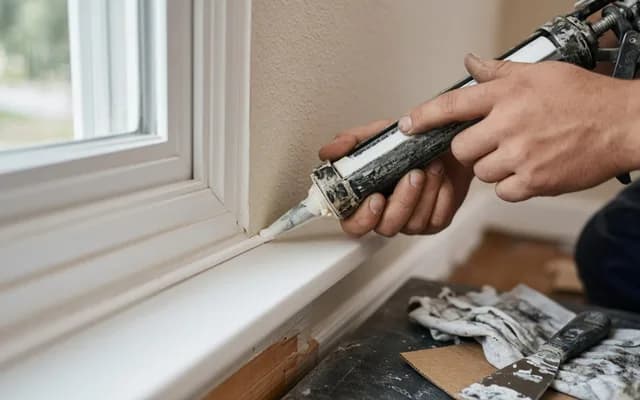
General home repairs are the grouped small tasks that keep a house working: sticking doors, loose handrails, failed caulk, cracked trim, wobbly fixtures, weatherstripping, and minor carpentry.
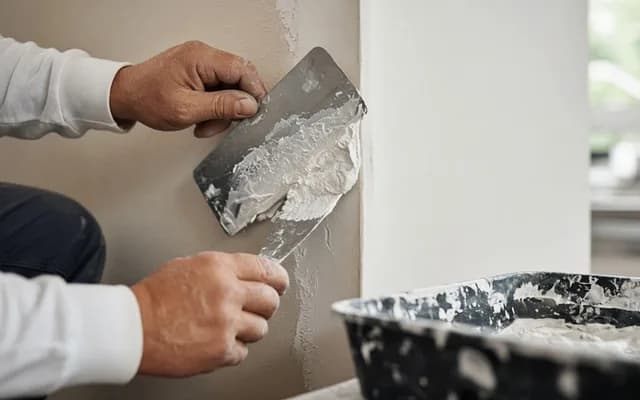
Painting and drywall work through a handyman covers holes, cracks, water-stained sections, corner bead damage, texture matching, and repainting a wall or room once the cause of the damage is handled.
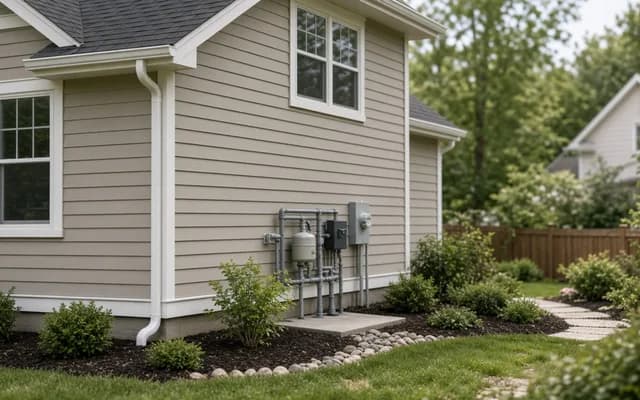
This scope covers minor plumbing and electrical symptoms a homeowner notices first: a dripping faucet, a running toilet, a slow drain, a dead outlet, a wobbling ceiling fan, a light fixture swap.
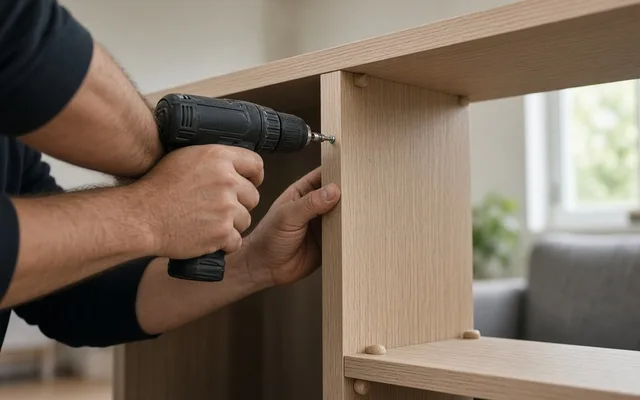
Assembly and mounting covers flat-pack furniture, TV and monitor mounts, floating shelves, mirrors, curtain hardware, and anti-tip anchoring for dressers and bookcases.
Ready to price your handyman services?
Tell us the size, the condition of what is there now, and what you want to change. Home Repair Scopebook passes your request to independent local professionals, who reply with written, no-obligation estimates. The service is free to use.