Have you checked what licensing rules apply to handyman work at your address?
No votes yet. Yours will be the first. · saved on this device
Loading...
Home Repair Scopebook · Planning quiz
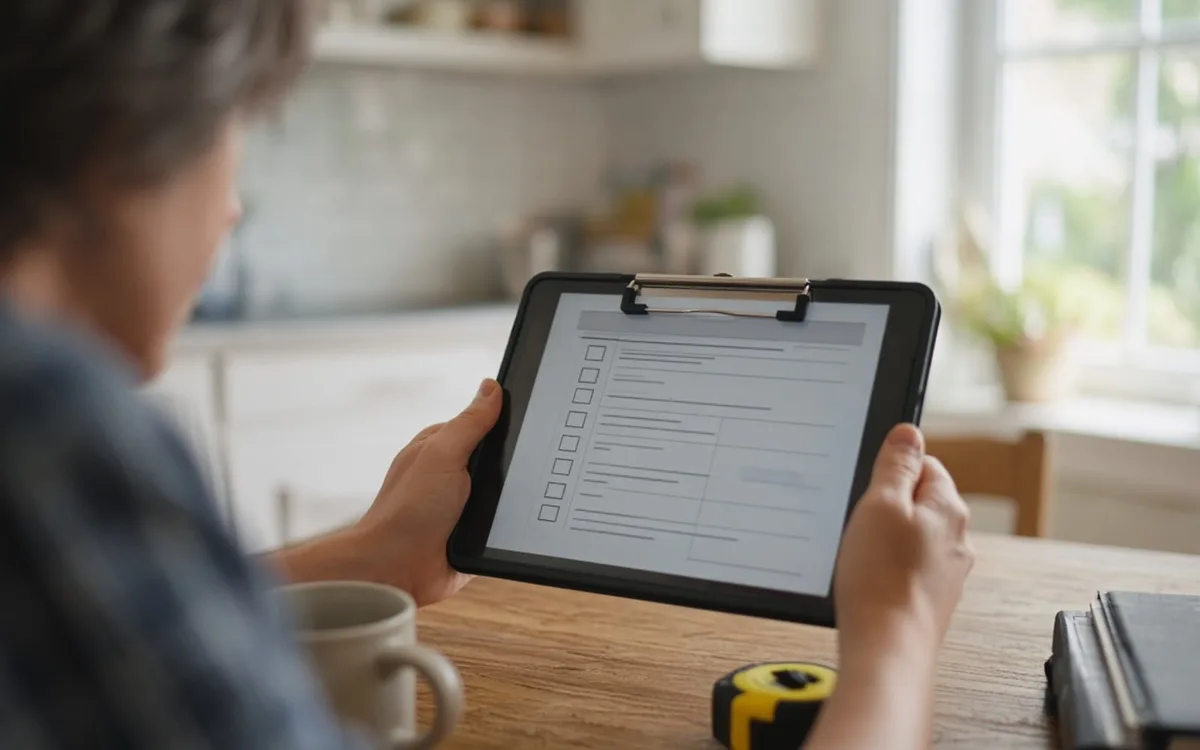
This ten-question quiz checks what you know about handyman rates, minimum charges, material markup, licensing limits, and the tasks where DIY tends to fail. Every answer is explained with a published figure from Angi, HomeAdvisor, Fixr, Thumbtack, Hippo, Harvard JCHS, or the EIA. It takes about five minutes and makes the rest of the site faster to use.
Start the quiz0 of 10 answered
Most homeowners have hired a handyman at some point and most still carry a few wrong assumptions: that hourly rates are pure profit, that a minimum charge is a scam, that any small electrical job is fine for anyone. The data corrects each of those. BLS puts the median wage for maintenance and repair workers at $49,590, which is why a $75 hourly rate is not what it looks like once overhead and unbilled time are added.
Answer the ten questions, read the explanations, and then read the service pages with the vocabulary in place. If a question surprises you, the linked page goes deeper. The tools hub describes how the quiz fits with the calculator and comparisons.
Four themes. Pricing: averages, hourly ranges, minimums, and day rates. Materials: who should buy what and what the markup is. Scope: where handyman work ends and licensed-trade work begins, with California's threshold as the worked example. Behavior: what the surveys say about DIY overspend, hiring out (a record 84.1% of owner improvement spending went to pros in 2023, per Harvard JCHS), and deferred repairs. Each explanation names its source and year so you can check it.
The questions are multiple choice with one best answer. Some have a second answer that is close; the explanation says why the best one is best. Hippo's finding that 58% of DIYers overspent because of mistakes appears twice because it is the single most useful number for deciding whether to hire.
Because the rules are local and rarely explained. Most people assume either that a handyman can do anything small or that any plumbing or electrical needs a license, and both are wrong in most states. The threshold-plus-regulated-trade structure, illustrated by California's $1,000 limit under AB 2622, is the pattern to learn; the details at your address come from the pro. The locations page explains how the pattern varies.
Because materials are the part of a handyman bill most under your control. Angi's reported 10–30% markup on pro-supplied materials and HomeGuide's $30 to $80 trip fee (on top of minimums of $75–$200) are both avoidable for anything you can specify in advance. The quiz asks which items to buy and which to leave to the pro; the answer is the same rule the general repairs page gives.
Under five: read the general repairs page and the plumbing and electrical page before requesting estimates; the scope questions will save you a misrouted call. Five to seven: you are ready to write a list; use the calculator to budget it. Eight or more: go straight to the request form and use the comparison pages only for the items you are unsure about.
Angi's 2026 handyman cost guide and 2025 spending pulse, HomeAdvisor's 2026 price list, Fixr's 2025 handyman guide, Thumbtack's 2026 marketplace data, HomeGuide's 2026 rate guide, Hippo's DIY survey, Harvard JCHS's 2025 Improving America's Housing, BLS's Occupational Outlook Handbook, and the AB 2622 summary. Energy questions draw on our own analysis of the EIA's 2024 household survey, which found 13.8% of homes drafty most or all of the time. Each source is linked from the statistics on the service pages.
Homeowner polls
No votes yet. Yours will be the first. · saved on this device
Hippo found 58% of DIYers spent more than planned because of mistakes.
No votes yet. Yours will be the first. · saved on this device
It shows your score at the end and does not save anything. Retake it after reading the service pages if you want to see the difference. Nothing about your answers is stored or shared.
Because AB 2622 is a clearly documented example of the threshold-plus-regulated-trade structure most states use. It is not a claim that the $1,000 limit applies elsewhere. The explanation says to ask the pro what applies at your address, and the locations page explains the variation.
They come from 2025 and 2026 editions of the cited guides and surveys. Trade prices move with labor markets, so treat any figure as a planning reference rather than a fixed number. Each figure's year is given in the explanation.
Check the source, which is named in every explanation and linked from the statistics on the service pages. The quiz reports what the published sources say; if a source has updated, the site updates when it does. Disagreement with a source is a good reason to ask a local pro how it applies to you.
Yes; it is a public page. It is a useful five-minute primer before someone writes a request, particularly on the scope and minimum-charge questions, which are the ones that most often lead to misrouted calls and surprise invoices.
Indirectly, through the scope questions: the ceiling fan wiring boundary and the licensing threshold are both safety boundaries as much as legal ones. The service pages cover safety in more detail, particularly tip-over anchoring on the assembly page and shutoff valves on the plumbing page.
No. The quiz is written for homeowners deciding what to ask for and whom to call. Pros will find the questions basic, which is the point: the answers are what a pro assumes you know and most homeowners do not.
 Free toolHandyman cost calculator: price the visit by the hour
Size, material tier and complexity in, a realistic budget range out.
 Free toolWho should do the job? Handyman comparisons with sourced numbers
Side-by-side tables for the decisions that change the price most.
 Free toolPolls: how other homeowners handle the repair list
See what other planners chose and add your vote.
 Service guideGeneral Home Repairs
General home repairs are the grouped small tasks that keep a house working: sticking doors, loose handrails, failed caulk, cracked trim, wobbly fixtures, weatherstripping, and minor carpentry.
 Service guidePainting & Drywall
Painting and drywall work through a handyman covers holes, cracks, water-stained sections, corner bead damage, texture matching, and repainting a wall or room once the cause of the damage is handled.
 Service guidePlumbing & Electrical
This scope covers minor plumbing and electrical symptoms a homeowner notices first: a dripping faucet, a running toilet, a slow drain, a dead outlet, a wobbling ceiling fan, a light fixture swap.
 Service guideFurniture Assembly & Mounting
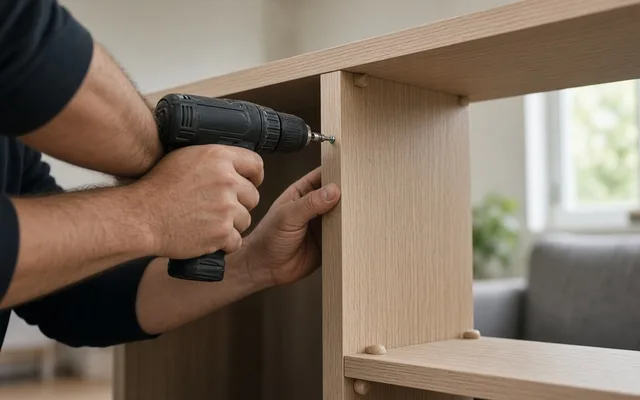
Assembly and mounting covers flat-pack furniture, TV and monitor mounts, floating shelves, mirrors, curtain hardware, and anti-tip anchoring for dressers and bookcases.
Tell us the size, the condition of what is there now, and what you want to change. Home Repair Scopebook passes your request to independent local professionals, who reply with written, no-obligation estimates. The service is free to use.