What is the largest category on your current repair list?
Today's Homeowner found 82% of homeowners have at least one outstanding repair.
No votes yet. Yours will be the first. · saved on this device
Loading...

Get the right help for repairs that keep getting put off.
Home Repair Scopebook is a planning resource for U.S. homeowners with a backlog of small repairs. It explains what a handyman can legally and practically do, what an hour or a task should cost according to published 2025–2026 data, and how to write a list that gets a fixed price. When you are ready, the request form matches you with independent local professionals for a free written estimate, no obligation.
By the numbers
Every figure links to its published source.
$406
national average handyman project cost across 103,764 verified projects (2026)
Angi's 2026 guide puts the typical range at $164 to $648 per visit. It is a project total for one or two tasks, not an hourly rate, so a longer bundled list will land above it.
Angi, How Much Does It Cost to Hire a Handyman? [2026 Data] (2026)$390
HomeAdvisor's 2026 national average handyman job cost ($165–$615 typical)
HomeAdvisor's figure lands within $20 of Angi's $406, which is a useful sign that both guides are describing the same one-or-two-task visit. Use either as a sanity check on a short list.
HomeAdvisor, 2026 Handyman Price List (2026)$130
most common handyman minimum charge, per Fixr
The minimum is payable even if a job takes forty minutes. It is the strongest argument for bundling: one minimum spread across six tasks costs a fraction of six separate calls.
Fixr, How much does it cost to hire a handyman? (2025)82%
of homeowners say at least one area of their home needs repair
Today's Homeowner's 2025 survey found 45% have one or two outstanding items and most intend to address them within six months. The households with four or more items gain the most from one bundled visit.
Today's Homeowner, Home Repair Survey (2025)Most households carry a repair list that never quite gets scheduled: a bathroom door that will not latch, a drywall ding behind the couch, a ceiling fan that wobbles, a bookcase still in its box. According to Today's Homeowner's 2025 survey, 82% of homeowners have at least one area of the home waiting on a fix, and most say they intend to deal with it within six months. The gap between intending and hiring is usually not money. It is not knowing what to ask for.
This site fixes that gap. It shows how handymen actually price work (hourly, per task, or per visit with a minimum), where a small job stops being handyman work and becomes licensed-trade work, and how to bundle a list so the minimum charge is spread over many tasks instead of one. Use the hourly cost calculator for a first budget, the comparison pages to settle handyman-versus-specialist questions, and the estimate request when your list is ready.
Home Repair Scopebook ran these numbers on the federal government's own household data. You won't find them in a contractor's brochure.
Home Repair Scopebook analysis · 2024
95% interval 11.3%–13.3% · about 6.6 million homes · 7,124 survey households
95% interval 5.0%–6.6% · about 2.1 million homes · 4,841 survey households
Difference: 6.5 percentage points (95% interval 5.4 to 7.6).
Homes built before 1990 report frequent drafts about twice as often as newer ones. Air sealing is usually the cheapest first fix in an older house, before windows or new equipment.
Source: Home Repair Scopebook analysis of 2024 federal household survey data from the U.S. Energy Information Administration. How we calculated it
Each guide covers what it costs, what fails first, and how to compare written proposals.
 Service guideGeneral Home Repairs
General home repairs are the grouped small tasks that keep a house working: sticking doors, loose handrails, failed caulk, cracked trim, wobbly fixtures, weatherstripping, and minor carpentry.
 Service guidePainting & Drywall
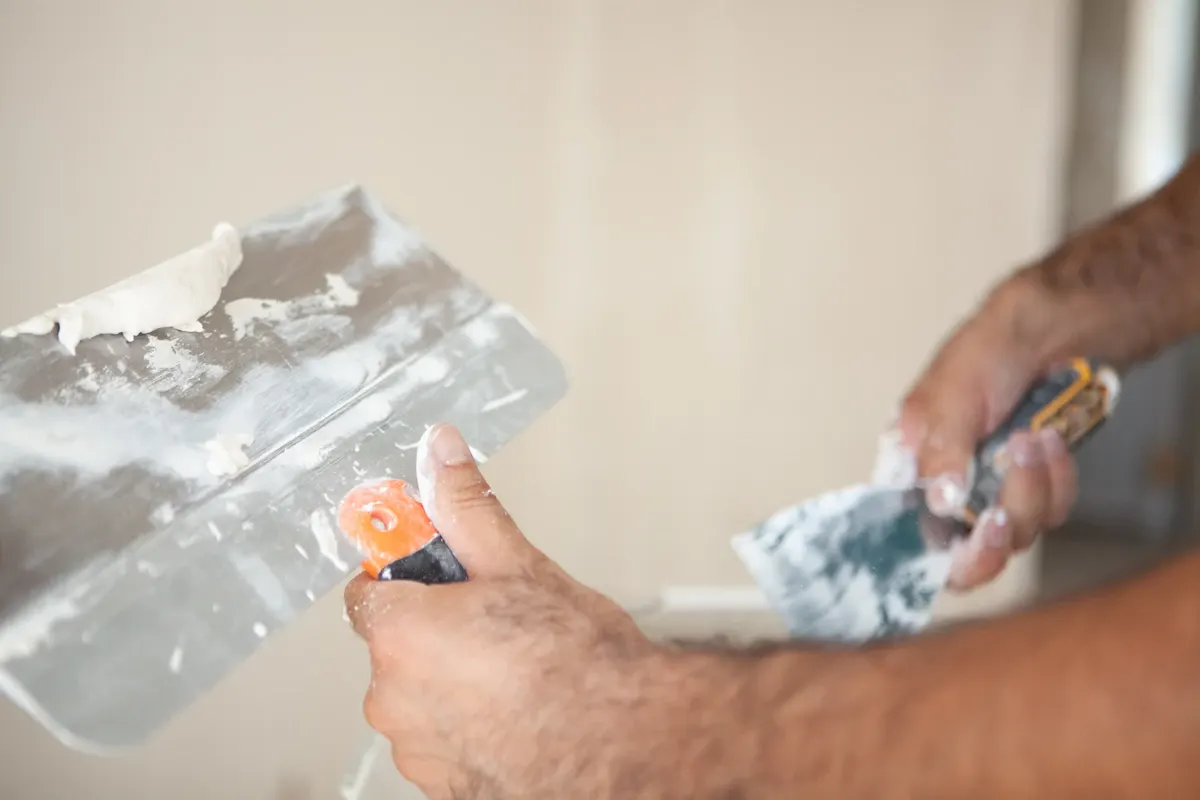
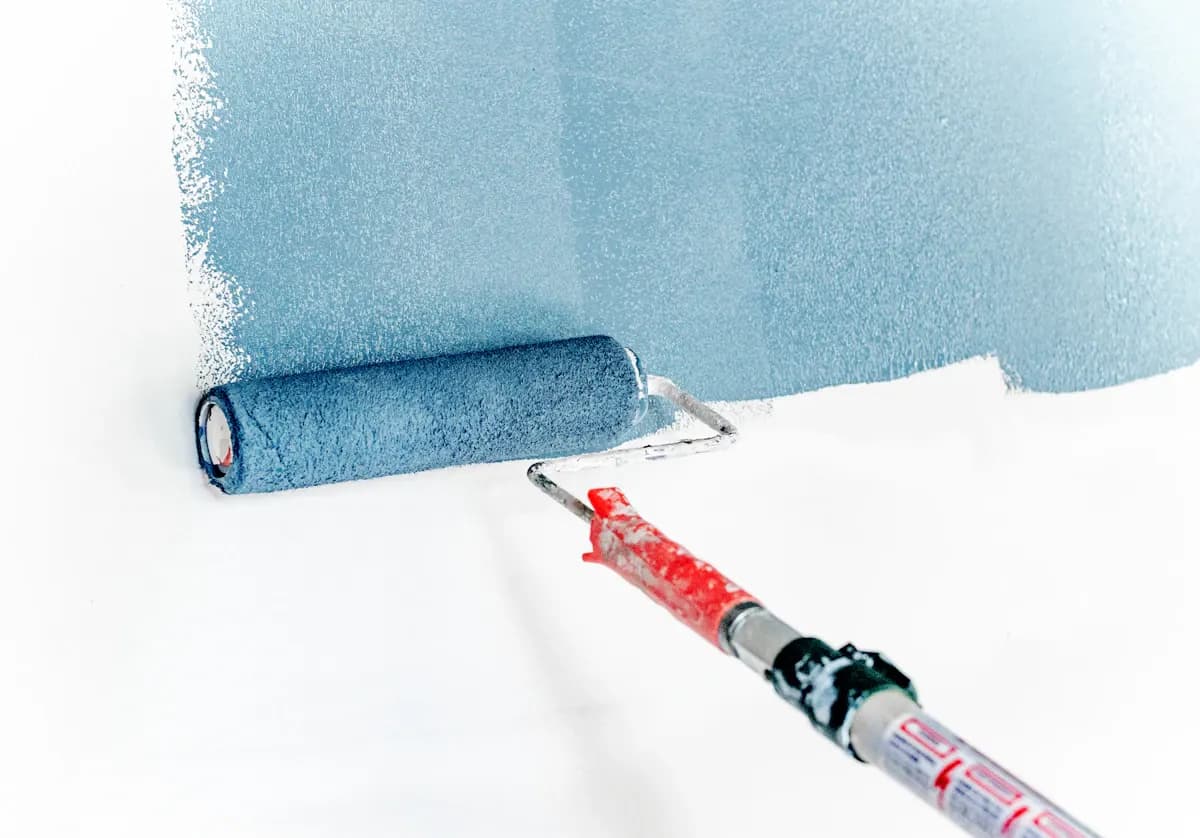
Painting and drywall work through a handyman covers holes, cracks, water-stained sections, corner bead damage, texture matching, and repainting a wall or room once the cause of the damage is handled.
 Service guidePlumbing & Electrical
This scope covers minor plumbing and electrical symptoms a homeowner notices first: a dripping faucet, a running toilet, a slow drain, a dead outlet, a wobbling ceiling fan, a light fixture swap.
 Service guideFurniture Assembly & Mounting
Assembly and mounting covers flat-pack furniture, TV and monitor mounts, floating shelves, mirrors, curtain hardware, and anti-tip anchoring for dressers and bookcases.
Two of the largest U.S. cost guides land within twenty dollars of each other. Angi's 2026 guide, built from 103,764 verified projects, puts the national average handyman job at $406, with most homeowners paying $164 to $648. HomeAdvisor's 2026 price list reports a $390 average inside a $165 to $615 typical range. Those are project totals for a visit covering one or two tasks, not hourly rates, and that distinction is where most quote confusion starts.
Hourly pricing is more scattered because it depends on the metro and on whether the first hour is billed higher. HomeAdvisor reports $60–$125 per hour before materials. Thumbtack's marketplace data centers on $60 to $75 an hour with a high end of $100 to $125 in expensive cities. Fixr finds the single most common rate is about $65 an hour. If a quote is far outside these bands, ask what is included before assuming it is wrong; a pro who carries insurance and a stocked van costs more than one who does not.
The number that trips people up is the minimum. Fixr reports a most-common minimum charge of $130, payable even if the job takes forty minutes. HomeGuide sees minimums of $75 to $200, sometimes structured as a higher first-hour rate. A single picture-hanging call at that price feels expensive. The same minimum spread across six tasks in one afternoon is a bargain, which is why the rest of this page is about building the list.
| Pricing model | Published range | Best for | Source |
|---|---|---|---|
| Hourly | $60–$125/hr | Open-ended lists, diagnosis | HomeAdvisor 2026 |
| Per task | $65 (hall light) to $300 (kitchen sink) | Well-defined single jobs | HomeAdvisor 2026 |
| Half-day bundle (2–5 hrs) | $316–$428 | Several small tasks | Thumbtack 2026 |
| Full day | $701–$1,105 | Long punch lists | Thumbtack 2026 |
A handyman is a generalist who does small carpentry, patching, painting, assembly, mounting, fixture swaps, weatherstripping, caulking, and the hundred adjustments that keep a house working. The line between that work and licensed-trade work is drawn by state and local law, not by skill. In California, AB 2622 raised the contractor-license exemption to $1,000 per project including labor and materials, provided no permit is required and no employees are used. Many other states set thresholds between $500 and $2,500, and some regulate any plumbing or electrical work regardless of dollar value.
Practically, that means a faucet cartridge swap or a like-for-like light fixture is often fine for a handyman, while a new circuit, a gas connection, or moving a drain is not. The plumbing and electrical page walks through the common symptoms and which ones should go straight to a licensed trade. Anything structural, anything behind a permit, and anything involving a load-bearing wall belongs with a contractor even if the dollar value is small.
Sort your list into three piles before you send it: routine tasks a handyman can do, uncertain tasks that need diagnosis first, and regulated tasks that need a trade. Send all three, but label them. A good pro will tell you which uncertain items they can assess on site and which ones they will decline, and that answer is itself a useful screen.
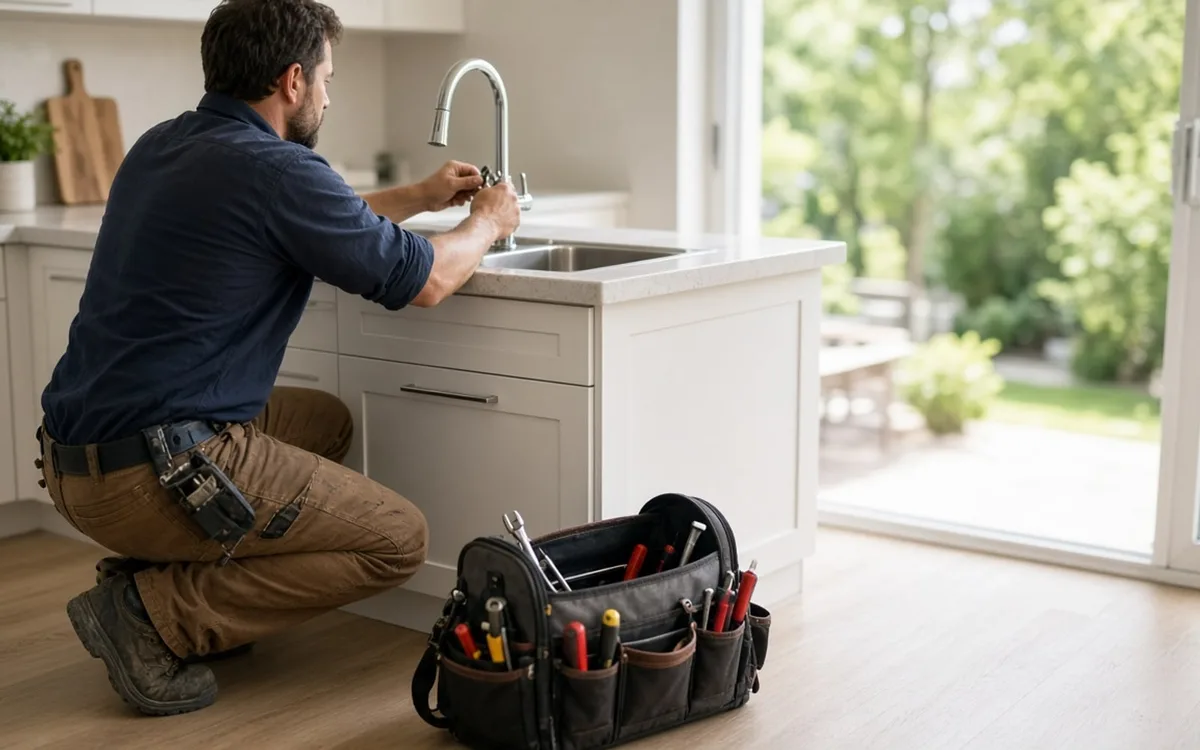
Every visit carries fixed overhead: travel, setup, the minimum charge, and often a material run. Spread that overhead across one task and the effective hourly rate doubles. Spread it across a half day and it nearly disappears. Angi's 2025 Home Spending Pulse found only 29% of surveyed homeowners who hired a pro had bundled repairs into one visit to control costs, which means most people are paying the overhead repeatedly.
Thumbtack's data makes the arithmetic visible. Simple tasks under two hours typically total $178 to $220, while a multi-project visit of two to five hours runs $316 to $428. Six small jobs booked separately at the low end would cost over $1,000; the same six jobs as one half-day visit cost a third of that. The general repairs page shows how to write a list that a pro can price as a block rather than as six separate calls.
Bundling only works if the visit is productive. That means parts on hand, access cleared, pets contained, and a written order of priority so the important items get done first if the day runs long. The planning tools include a printable list format that covers all of that.
Usually yes for anything you can specify exactly. Angi reports handymen add 10–30% above retail when they source materials, and HomeGuide notes a $30 to $80 trip charge when the pro has to shop mid-job. A faucet, a light fixture, a door knob, or a box of drywall screws is easy to buy in advance. The markup fairly covers the pro's time and the risk of a wrong part, but you can avoid it.
The exception is anything where the fit depends on what is found behind the wall or under the sink. Supply lines, valve stems, anchors, and patch materials vary by what is already there, and a pro's van stock will often be the right answer. Ask each estimate to state which materials you will supply and which the pro will bring, and how the pro-supplied items are billed: at cost, at cost plus a stated percentage, or as a flat allowance.
For some tasks, obviously. For unfamiliar ones, the data says be careful. Hippo's survey of 1,736 homeowners found 58% spent more than planned on DIY projects because of mistakes, 47% underestimated the time, and 38% paid $500 or more to repair their own damage. The same survey found 70% of DIYers were motivated by saving money, which is exactly the outcome that failed for the majority.
The broader trend is toward hiring out. Harvard's Joint Center for Housing Studies reports that professionally installed improvements reached 84.1% of owner improvement spending in 2023, an unprecedented share, while DIY outlays fell. Per-owner maintenance spending hit a record $1,200 the same year. Homeowners are choosing to pay for skill and speed on small jobs, not just large ones.
A useful rule: if the task needs a tool you would buy once and never use again, or if a mistake would damage a finished surface, get a quote first. The repair quiz scores a task on those dimensions. The DIY versus handyman comparison runs through the trade-off for the most common jobs.
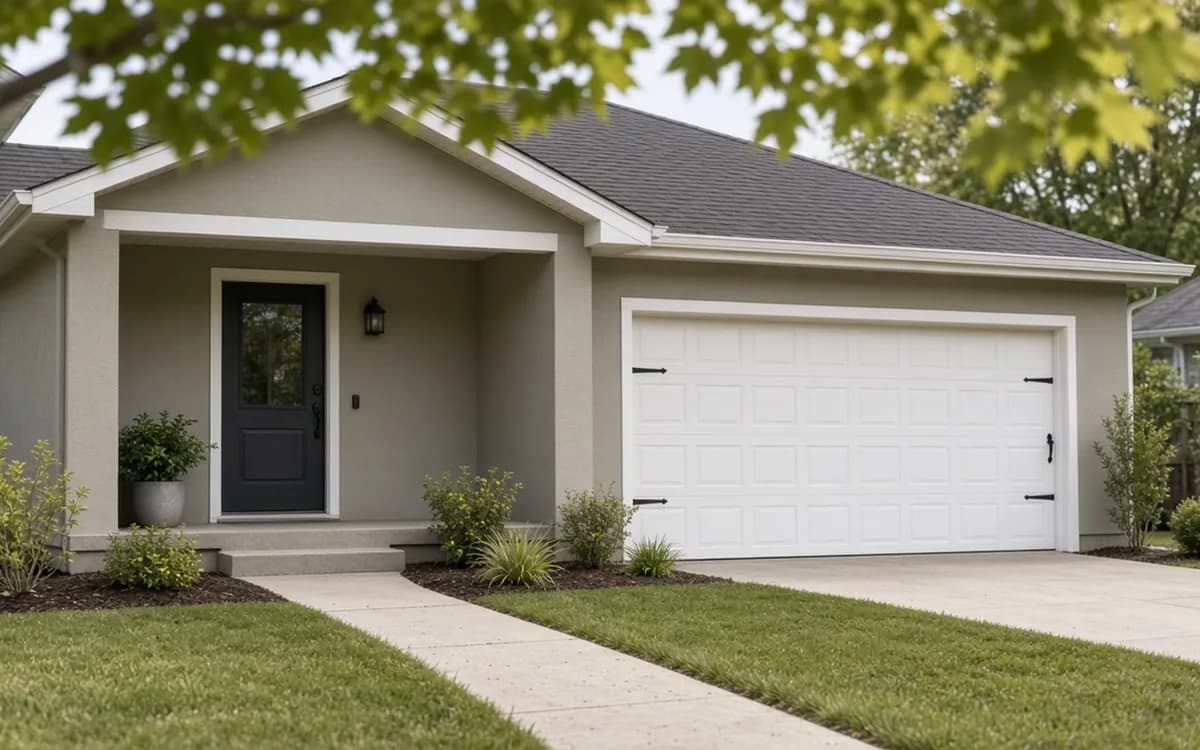
Much handyman work is weatherproofing and small energy fixes rather than repairs in the usual sense. Our analysis of the federal government's 2024 household energy survey found 13.8% of occupied U.S. homes are drafty most or all of the time and another 41.3% are drafty some of the time. Age matters: among owner-occupied homes, frequent drafts run 12.3% in houses built before 1990 against 5.8% in newer ones, a 6.5 pts gap by our count. Weatherstripping, sweeps, and hatch seals are afternoon tasks that bundle well.
Windows are a bigger version of the same story. The same survey found 62.4% of homes still have mostly original windows and 33.1% have mostly single-pane glass. Full replacement is contractor work, but re-glazing a sash, new balances, storm panels, or frame sealing is handyman work and often what stops the draft.
Lighting swaps are similar. By our tabulation of the same survey, 10.3% of homes use no indoor LED bulbs at all, even though 74.8% run LEDs in at least half their sockets. Swapping fixtures is one of the cheapest items on a handyman price list; HomeAdvisor lists a hall light install at $65. They rarely justify a visit alone, so add them to any estimate request.
The written proposal is where a vague list becomes a real price. Look for the pricing model stated plainly (hourly with the rate, per task with each task priced, or a day rate), the minimum charge and what triggers it, the material arrangement, the approval process for extra work discovered on site, and a spending cap you set. The reviews guide covers what to check about the pro; this is about the document.
Also ask for the items the pro declined and why. A proposal that quietly omits the wobbly ceiling fan because it needs a new box is less useful than one that says so, because it tells you which trade to call next. HomeAdvisor's ceiling fan data shows a swap on existing wiring at $100 to $300 but new wiring pushing the job to $2,000, and a pro who flags that boundary is protecting you.
Convert both to a total for the same list. If one pro quotes $85 an hour and estimates four hours, and another quotes $360 flat for the same five tasks, they are within range of each other and the flat quote carries less risk. If the hourly pro also charges a $130 minimum and a $50 trip fee, the comparison shifts. HomeAdvisor's per-task figures ($65–$300 from a hall light to a kitchen sink) give you a third reference to sanity-check both.
Then compare response time, whether the pro will return for a missed item, and how they handle a task that grows. The homeowner polls show how others weigh those factors; price is usually the least decisive.
Homeowner polls
Vote to see live results from other homeowners planning the same project.
Today's Homeowner found 82% of homeowners have at least one outstanding repair.
No votes yet. Yours will be the first. · saved on this device
No votes yet. Yours will be the first. · saved on this device
Hippo found 58% of DIYers spent more than planned because of mistakes.
No votes yet. Yours will be the first. · saved on this device
 Free toolHandyman cost calculator: price the visit by the hour
Size, material tier and complexity in, a realistic budget range out.
 Free toolWho should do the job? Handyman comparisons with sourced numbers
Side-by-side tables for the decisions that change the price most.
 Free toolHow well do you understand handyman pricing and scope?
10 questions that show what you already know and what to check next.
 Free toolPolls: how other homeowners handle the repair list
See what other planners chose and add your vote.
Plan on a half day. Thumbtack's 2026 data shows multi-project visits of two to five hours are the norm for a list of small jobs, and a pro who has the parts and a clear list can usually finish six routine tasks (patch, caulk, hang, swap, adjust, tighten) in that window. Diagnosis tasks add time because the pro has to find the cause before fixing it. Put the must-do items first so the important work is done if the visit runs long.
Most do not charge for a quote based on photos and a written list, which is why this site pushes you to prepare both. Some charge a diagnostic or trip fee for an in-person look at an uncertain problem, typically folded into the job if you proceed. Ask up front. HomeGuide reports trip charges of $30 to $80 when a pro has to travel to shop for materials, and a similar fee can apply to a site visit outside the service area.
Often, for work the handyman is allowed to do. HomeAdvisor lists a bathroom faucet swap at about $90 and a ceiling fan at $100 through a handyman, while licensed trades carry higher minimums. The catch is scope: anything involving new circuits, gas, drain relocation, or a permit needs the licensed trade regardless of price. The plumbing and electrical page on this site explains the common boundaries.
Agree on the process before the visit. A good written estimate says that any work beyond the list requires your approval, and sets a dollar cap below which the pro can proceed without a call. Hippo's 2025 report found 83% of homeowners faced unexpected repairs in 2024, so surprises are normal. The goal is that a rotten subfloor under a loose toilet turns into a conversation and a separate quote, not an unexplained line on the invoice.
A regular pro who knows the house is worth more than a few dollars saved per visit. They learn where the shutoffs are, what was fixed last time, and which items you have been deferring. Harvard JCHS puts average owner maintenance spending at a record $1,200 a year in 2023, and that money goes further with continuity. Shop the first job, keep the pro who communicates well, and revisit the rate once a year.
Harvard's Joint Center for Housing Studies reports per-owner maintenance spending reached a record $1,200 in 2023, and Angi's State of Home Spending report puts 2025 household maintenance at $2,041 plus $1,143 in emergency repairs. A realistic planning figure for handyman-scale work is $1,000 to $2,000 a year for a typical single-family home, more for older houses. Two or three bundled visits a year usually cover it.
It depends on the state and the job. Many states exempt small jobs below a dollar threshold from contractor licensing, such as California's $1,000 limit under AB 2622, but regulate plumbing, electrical, and HVAC work separately. Some cities require a business license or registration. Always ask what licensing applies to the specific tasks on your list, and ask for proof of liability insurance regardless of licensing status.
Yes, if the list is specific enough. Pros quote fixed prices when they can see the task, know the parts, and understand the access. Photos, product model numbers, and measurements make that possible. Uncertain items (a leak with no visible source, a switch that works intermittently) will usually stay hourly until diagnosed. Ask for fixed prices on the defined tasks and an hourly rate with a cap on the rest.














 LocationsRegional planning notes
How climate, codes and prices change a project across U.S. regions.
 ArticlesPlanning articles
Cost guides, checklists and mistakes to avoid before you sign.
 ReviewsHow to read reviews
What genuine contractor reviews look like and what they leave out.
Tell us the size, the condition of what is there now, and what you want to change. Home Repair Scopebook passes your request to independent local professionals, who reply with written, no-obligation estimates. The service is free to use.