What caused the last wall damage you had repaired?
No votes yet. Yours will be the first. · saved on this device
Loading...
Home Repair Scopebook · Service guide
Painting and drywall work through a handyman covers holes, cracks, water-stained sections, corner bead damage, texture matching, and repainting a wall or room once the cause of the damage is handled. It suits homeowners with a defined finish problem and a known cause. Published 2026 data puts drywall repair near $600 on average and a single room paint around $750, with preparation driving most of the price.
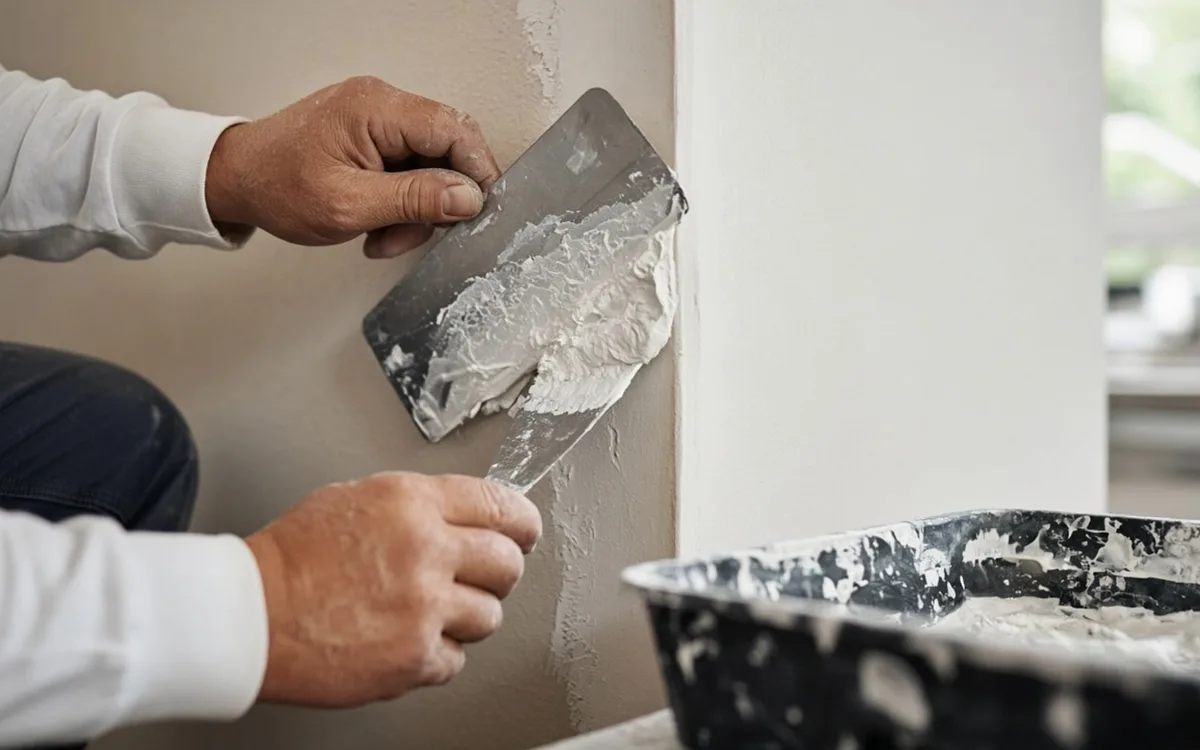
Drywall and paint are the most visible repairs in a house and the ones most likely to be judged in raking afternoon light. A patch is either invisible or it is not, and the difference is almost entirely preparation: feathering the compound wide enough, matching the texture, priming the patch so it does not flash through the topcoat. HomeAdvisor's 2026 data puts drywall repair at $612 on average, and the range from $296 to $929 tracks how much of that prep the job needs.
This page covers what the common jobs cost, why a handyman is often the right call for a single patch and the wrong one for a whole room rebuild, how to specify texture and paint so the estimate is comparable, and the one rule that matters more than any of it: find out why the wall is damaged before covering it. The plumbing page handles the leaks that cause most stains.
Want the numbers only? Read the painting & drywall cost guide for 2026 ranges, what moves the price, and sample budgets.
| Item | Low | High | Unit | Notes |
|---|---|---|---|---|
| Small drywall hole patch (handyman) | $125 | $175 | per patch | Fixr 2025; contractor minimums push this to $300–$500 |
| Larger drywall repair | $275 | $800 | per repair | Fixr 2025 |
| Drywall repair, all types | $296 | $929 | per repair | HomeAdvisor 2026 typical range; $612 average |
| Water-damaged drywall section | $600 | $1,550 | per section | HomeAdvisor 2026; includes removal and drying |
| Paint one room, walls only | $300 | $1,000 | per room | HomeGuide 2026; $750 national average |
| Paint room incl. ceiling and trim | $600 | $2,000 | per room | HomeGuide 2026 |
| Painting labor by surface | $1 | $3 | per sq ft | HomeGuide 2026 |
| New drywall installed | $48 | $80 | per 4x8 sheet | Fixr 2025; $1.50–$3.50 per sq ft |
Homeowners with a defined problem: a doorknob hole, a cracked corner, nail pops, a section that got wet once from a fixed leak, a wall that needs repainting before a tenant or a listing. NAR's 2025 Remodeling Impact Report found that painting is the pre-sale project Realtors recommend most, with 50% suggesting a whole-home repaint and 41% a single room. Both are handyman-scale jobs with a fast turnaround, which is why they rank so high.
It is the wrong scope when the damage keeps coming back. A crack that reopens each spring is movement; a stain that returns after painting is moisture; a bubbling patch is trapped water or a bad substrate. Paying to cover any of those is paying twice. Diagnose first, then patch. It is also the wrong scope for a full room of new drywall, where Fixr's installed price of $48–$80 per sheet makes a drywall contractor with a crew and a lift the faster and usually cheaper choice.
The price curve is steep at the small end because of minimums. HomeGuide reports a small hole under four inches at $300–$500 through a drywall contractor, largely because those contractors carry $350 to $650 minimum job fees. A handyman with a $130 minimum will patch the same hole for far less, especially inside a bundled visit. Fixr's handyman-scale bands, $125–$800, put a wall hole at $125 to $175 and larger drywall repair at $275 to $800.
Painting is priced by surface area. HomeGuide's 2026 guide puts one room at $300–$1,000 for walls only and $600 to $2,000 with ceiling and trim, at $1 to $3 per square foot of surface. DIY runs $150 to $300 in materials, and some painters carry a $250 to $500 minimum. Water damage is its own category: HomeAdvisor shows water-damaged sections at $600 to $1,550 because the wet material has to come out and the cavity has to dry before anything goes back.
Materials are cheap relative to labor. HomeAdvisor prices a small drywall fix at $20 to $120 in total, and a gallon of quality paint covers about 400 square feet. When a quote is high, it is the hours, and the hours are prep.
| Job | Published range | Where the time goes | Source |
|---|---|---|---|
| Small hole patch (under 4 in) | $125–$175 handyman; $300–$500 contractor | Feathering, texture, priming | Fixr 2025; HomeGuide 2025 |
| Large drywall repair | $275–$800 | Cutting out, backing, taping, 2–3 coats of compound | Fixr 2025 |
| Water-damaged section | $600–$1,550 | Removal, drying, replacement, matching | HomeAdvisor 2026 |
| Paint one room, walls only | $300–$1,000 | Masking, cutting in, two coats | HomeGuide 2026 |
| Paint room with ceiling and trim | $600–$2,000 | Trim prep and brushwork | HomeGuide 2026 |
| New drywall, installed | $48–$80 per 4x8 sheet | Hanging, taping, finishing | Fixr 2025 |
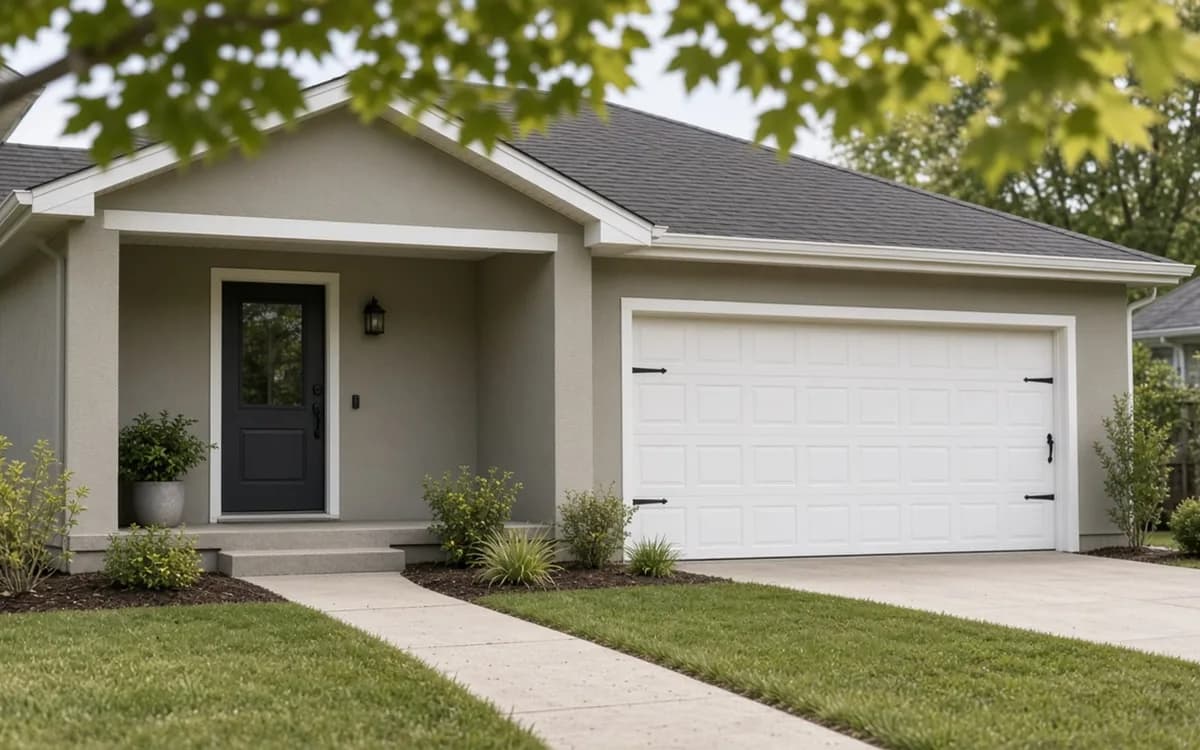
Most U.S. homes built after the 1970s have textured walls (orange peel, knockdown, skip trowel) and a smooth patch on a textured wall is visible from across the room. Matching requires the right texture product, the right nozzle or trowel technique, and practice. Ask the pro what texture your walls have and how they will match it; a confident specific answer ("light orange peel, I'll spray it with a hopper and knock it down to match") is worth more than a general reassurance.
Smooth walls are harder in a different way. Any ridge in the compound shows, so the patch has to be feathered eight to twelve inches out and sanded flush, then primed so the compound does not absorb paint differently from the surrounding wall. Skipping the primer is why patches flash: a dull rectangle under a fresh coat. If the pro's estimate does not mention priming, ask.
Photos help here more than almost anywhere. A close, angled photo of the wall texture lets a pro price a patch accurately and bring the right product. The request form accepts photos; include one of the damage and one of an undamaged area nearby.
Say how many coats, which sheen, whether trim and ceiling are included, and who buys the paint. Two coats is standard; one coat over a similar color is a legitimate cost saver but should be stated. Sheen matters for touch-up: flat hides patches but scuffs; eggshell and satin are the usual compromise for living areas; semi-gloss goes on trim and in bathrooms. If you already have the color, supply it and avoid Angi's 10–30% material markup. If you do not, ask the pro to bring samples and price the paint at cost plus a stated percentage.
Specify protection and cleanup explicitly. Floors masked, furniture moved and covered or moved by you, outlet covers removed and replaced, switch plates cleaned. A good painter's estimate lists these; a quick estimate assumes them and then charges when they turn out to be needed. For a whole room, ask how long until furniture can go back; latex is dry to touch in an hour but cures over days.
A single small patch is a same-visit job with drying time between coats of compound; the pro will often patch first, do other list items, then return to sand and texture. A large repair or water damage is two or three visits because compound and primer need to dry properly. A room paint is typically one long day for walls, two with ceiling and trim, plus drying time before you can hang things back up.
Water damage adds a drying phase before any of that. The cavity has to reach normal moisture before new drywall goes in, or the stain and the mold come back. The pro should check with a moisture meter, not by touch. If the source of the water has not been fixed, stop; the plumbing and electrical page explains what to check.
Flashing patches, visible texture mismatch, ridges under raking light, paint on the ceiling line, and caulk lines that crack within a month are the common failures. Check the work in daylight from an angle, not straight on under a ceiling light. Run a hand over the patch; you should not feel an edge. Look at the cutting-in along the ceiling and trim, which separates a careful painter from a fast one.
The deeper failure is the recurring one. Hippo's survey found 58% of DIYers overspent because of mistakes, and drywall and paint are where a lot of those mistakes live: a patch that looked fine wet and shrank, a color that was one coat short. Hiring out is not automatically better; a rushed pro makes the same errors. The written estimate that names prep steps is your protection.
Humidity matters twice. Paint needs dry days, roughly 50°F to 85°F with moderate humidity, for exterior work and for interior work in unconditioned spaces. And humid regions see more moisture-driven drywall failure, particularly in bathrooms without adequate ventilation. Seasonal movement is common in older housing stock; by our analysis of the EIA's 2024 household survey, in the Northeast 17.2% of homes are drafty most or all of the time, and the same houses see seasonal cracking at corners and above doors.
House age brings lead. Homes built before 1978 may have lead paint, and any sanding or demolition of painted surfaces should follow lead-safe practices. Ask the pro how they handle it. Plaster walls in older homes also need different patching techniques than drywall, and a pro who has not worked with plaster will struggle. The locations page notes where older stock is concentrated.
Line up prep steps, coats, materials, and cleanup rather than the bottom line. A $400 patch-and-paint that includes priming and texture matching against a $250 one that does not is not a $150 difference; it is the difference between doing it once and doing it twice. The handyman versus painter comparison shows where the crossover point is for a full room.
Ask each pro how they would handle the surprise: what if the patch reveals wet insulation, what if the wall is plaster, what if the color needs a third coat. The one with a plan for those is the one who has done this before.
Homeowner polls
No votes yet. Yours will be the first. · saved on this device
No votes yet. Yours will be the first. · saved on this device
 Service guideGeneral Home Repairs
General home repairs are the grouped small tasks that keep a house working: sticking doors, loose handrails, failed caulk, cracked trim, wobbly fixtures, weatherstripping, and minor carpentry.
 Service guidePlumbing & Electrical
This scope covers minor plumbing and electrical symptoms a homeowner notices first: a dripping faucet, a running toilet, a slow drain, a dead outlet, a wobbling ceiling fan, a light fixture swap.
Most experienced ones can, using a spray can of texture for small patches or a hopper gun for larger areas, then knocking it down with a trowel for knockdown. Ask specifically and look for a confident, technical answer. Skip trowel and hand textures are harder and may need a drywall finisher. Send a close-up photo of an undamaged area so the pro can judge the texture before quoting.
It flashed: the joint compound absorbed the paint differently from the surrounding painted wall. The fix is a coat of primer over the patch before the topcoat. It is the most common shortcut and the easiest to prevent by putting "prime patches" in the written scope. If it has already happened, a coat of primer and one more topcoat on the patch usually blends it.
Often yes, corner to corner, unless the existing paint is recent and you have the same can. Touch-up paint from a different batch or a faded wall shows as a rectangle. Repainting the full wall costs an hour or two more and eliminates the risk. For a small patch on a flat-sheen wall with matching paint on hand, a careful touch-up can work.
After the cavity is dry, which a moisture meter confirms; a few days for a small wetting, longer for a saturated section. Repairing over damp framing traps moisture and invites mold. If the drywall stayed wet more than 48 hours, it usually needs to come out rather than be dried in place. The leak itself must be fixed first, or you will do this again.
Yes. Plaster over lath is harder, cracks differently, and needs patching compounds and techniques that not every handyman knows. Tell the pro up front; homes built before roughly 1950 usually have plaster. A pro experienced with plaster will ask about keys (the plaster that locks into the lath) and may recommend washers and screws to stabilize loose areas before patching.
Trim is a normal part of a room paint and priced as such. Cabinet painting is a different job: degreasing, sanding, priming with a bonding primer, and spraying or careful brushing, usually over several days. A handyman may do it, but ask about their process; a cabinet job done with wall paint and a roller fails within a year. Get it quoted separately.
Over a similar color with a quality paint, one coat can cover, and some estimates price it that way to save money. Over a color change, a patched wall, or a dark base, two coats are needed and a one-coat quote will look thin. State the number of coats in the scope so the price comparison is fair, and check coverage in daylight before the pro leaves.
Mostly. The pro drives a drywall screw an inch or two from the pop to re-secure the sheet, sets the popped nail, and patches both. If the pops are widespread and new, the framing may still be drying (common in newer homes) and a few may return. Fix them in a bundled visit rather than one at a time; each is a few minutes of work plus drying.
 Free toolHandyman cost calculator: price the visit by the hour
Size, material tier and complexity in, a realistic budget range out.
 Free toolWho should do the job? Handyman comparisons with sourced numbers
Side-by-side tables for the decisions that change the price most.
 Free toolHow well do you understand handyman pricing and scope?
10 questions that show what you already know and what to check next.
 Free toolPolls: how other homeowners handle the repair list
See what other planners chose and add your vote.
Tell us the size, the condition of what is there now, and what you want to change. Home Repair Scopebook passes your request to independent local professionals, who reply with written, no-obligation estimates. The service is free to use.