What is the largest category on your current repair list?
Today's Homeowner found 82% of homeowners have at least one outstanding repair.
No votes yet. Yours will be the first. · saved on this device
Loading...
Home Repair Scopebook · Polls
These polls ask narrow questions the published surveys do not: what is actually on your list, how you prefer to be billed, where your DIY limit sits, and what made you trust a pro. Results appear after you vote and reflect visitors to this site, not a random sample. They are context for your own decisions, not ratings of anyone.
Go to the pollsEvery poll below is answered by visitors planning handyman services. Results update the moment you vote, one vote per poll per browser, and your own choices stay highlighted so you can compare them with everyone else's. Nothing here is a sales survey; use it to see which trade-offs other homeowners are weighing before you request estimates.
15 polls · newly opened, so every vote shapes the first results · results saved on this device. Vote on any poll you have not answered; your own votes are highlighted.
Today's Homeowner found 82% of homeowners have at least one outstanding repair.
No votes yet. Yours will be the first. · saved on this device
No votes yet. Yours will be the first. · saved on this device
Fixr finds $130 is the most common handyman minimum charge per visit.
No votes yet. Yours will be the first. · saved on this device
No votes yet. Yours will be the first. · saved on this device
No votes yet. Yours will be the first. · saved on this device
Angi reports a 10–30% markup when the pro sources materials.
No votes yet. Yours will be the first. · saved on this device
No votes yet. Yours will be the first. · saved on this device
No votes yet. Yours will be the first. · saved on this device
No votes yet. Yours will be the first. · saved on this device
No votes yet. Yours will be the first. · saved on this device
Hippo found 58% of DIYers spent more than planned because of mistakes.
No votes yet. Yours will be the first. · saved on this device
No votes yet. Yours will be the first. · saved on this device
No votes yet. Yours will be the first. · saved on this device
No votes yet. Yours will be the first. · saved on this device
No votes yet. Yours will be the first. · saved on this device
By the numbers
Poll results above are from visitors to this site; these figures come from published research.
82%
of homeowners say at least one area of their home needs repair
Today's Homeowner's 2025 survey found 45% have one or two outstanding items and most intend to address them within six months. The households with four or more items gain the most from one bundled visit.
Today's Homeowner, Home Repair Survey (2025)71%
of homeowners who hired a pro had postponed at least one project
The same Angi pulse found 71% now prioritize preventative maintenance. Deferral is usually about not knowing who to call or what to ask, not about the money.
Angi 2025 Home Spending Pulse (2025)62%
of surveyed homeowners were more worried about maintenance affordability than a year earlier
Angi's 2025 pulse also found 19% chose cheaper materials or services and 23% started work early to beat price rises. A written list with fixed prices is the practical answer to that worry.
Angi 2025 Home Spending Pulse (2025)84.1%
share of owner improvement spending that went to professionals in 2023
JCHS calls this share unprecedented; DIY outlays fell in the same period. Homeowners are choosing to pay for skill and speed on small jobs as well as large ones.
Harvard JCHS, Improving America's Housing 2025 (Key Facts) (2025)The big surveys give the shape of the problem. Today's Homeowner found 82% of homeowners have at least one outstanding repair; Hippo found 83% of homeowners faced unexpected repairs in 2024, and Angi's State of Home Spending report puts average household maintenance spending at $2,041 in 2025. What those surveys cannot tell you is what a person with a list like yours decided to do about it. The most telling polls are the ones on minimum charges and list length, because they show whether bundling small jobs into one visit is how other homeowners keep the per-task cost down.
The polls here are organized around the site's five themes: the repair backlog, pricing and billing, scope and licensing, DIY limits, and how people choose a pro. Vote, read the results, then take what is useful to the calculator and the request form.
Calibration against people in the same situation. If most voters with a long list preferred a day rate, that is worth knowing before you ask for hourly. If most voters said the thing that made them trust a pro was a specific written estimate rather than reviews, that changes what you look for. The polls are not statistics and are not presented as such; the site's statistics come from named sources and are attributed in the text.
They are also a check on the site's own advice. Harvard's JCHS data that 84.1% of improvement spending went to pros says hiring is the norm; the polls ask what the hiring actually looked like.
Five categories, with the repair backlog first because it is the site's core theme. Pricing and billing covers hourly versus fixed, minimums, and material supply. Scope and licensing asks whether you have checked the rules and how you handle uncertain items. DIY limits asks where you draw the line. Choosing a pro asks what signals you actually used. Each poll's options are meant to be mutually exclusive; pick the closest.
That backlogs are near universal, that minimums punish one-task visits, and that DIY overspend is common. Today's Homeowner found 82% have a repair waiting; Hippo found 58% of DIYers overspent; Fixr found the most common minimum charge is $130, which makes one-task visits expensive. The polls start where those numbers stop, at the level of a single household decision, which is where the general repairs page and the comparisons operate too.
As a conversation with other visitors, not as evidence. Sample sizes are small and self-selected. A lopsided result is a prompt to ask why, not a rule. Where a poll result and a published statistic disagree, the statistic wins and the poll tells you something about who visits this site. The about page explains why the site keeps that distinction sharp.
Yes, through the contact form with "poll suggestion" in the message. Good suggestions are narrow, neutral, and answerable by anyone who has hired or considered hiring a handyman. Questions that rate specific businesses or ask for prices in a specific city are not added, because the results would be misleading at small sample sizes.

Each poll accepts one vote per visitor, tracked in your browser. Clearing browser data resets it, which is one reason the results are context rather than statistics. Vote once and read the results.
No. A vote records the option chosen and nothing about you. The site does not connect poll votes to estimate requests or to anything else.
Because the site does not verify pros and does not publish ratings, and a poll about a named business would function as one. The polls are about decisions and experiences in general. The reviews page explains how to evaluate a specific pro yourself.
They can prompt a review. Published statistics still take precedence; the polls are a small, self-selected sample.
When a question comes up repeatedly in contact-form messages or when a page is updated with new data.
They are written to be neutral and mutually exclusive, and several include a DIY or do-nothing option. If an option set seems to steer, use the contact form to say so; wording is reviewed.
Results show after you vote so that seeing them does not influence the answer. If you genuinely have no answer to a poll, skip it; the others are independent.
 Free toolHandyman cost calculator: price the visit by the hour
Size, material tier and complexity in, a realistic budget range out.
 Free toolWho should do the job? Handyman comparisons with sourced numbers
Side-by-side tables for the decisions that change the price most.
 Free toolHow well do you understand handyman pricing and scope?
10 questions that show what you already know and what to check next.
 Service guideGeneral Home Repairs
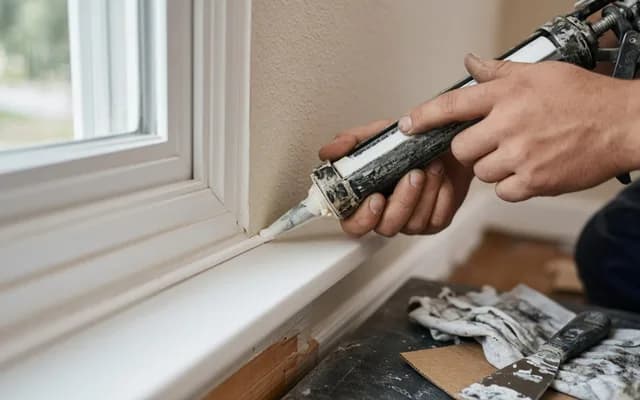
General home repairs are the grouped small tasks that keep a house working: sticking doors, loose handrails, failed caulk, cracked trim, wobbly fixtures, weatherstripping, and minor carpentry.
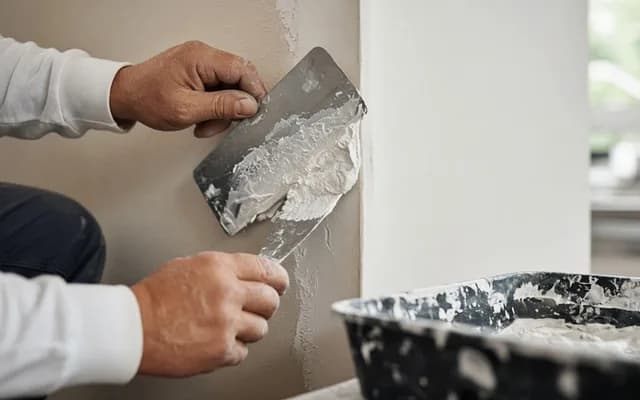 Service guidePainting & Drywall
Painting and drywall work through a handyman covers holes, cracks, water-stained sections, corner bead damage, texture matching, and repainting a wall or room once the cause of the damage is handled.
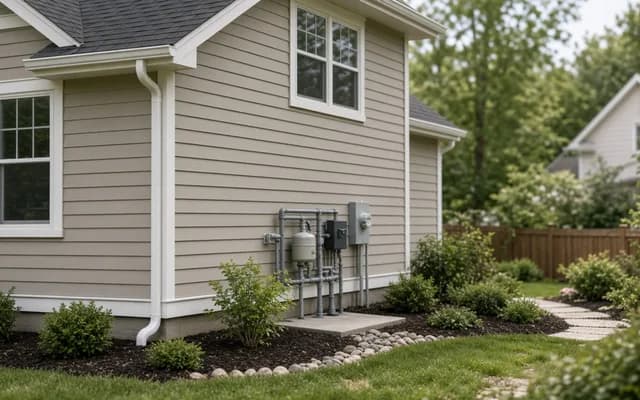 Service guidePlumbing & Electrical
This scope covers minor plumbing and electrical symptoms a homeowner notices first: a dripping faucet, a running toilet, a slow drain, a dead outlet, a wobbling ceiling fan, a light fixture swap.
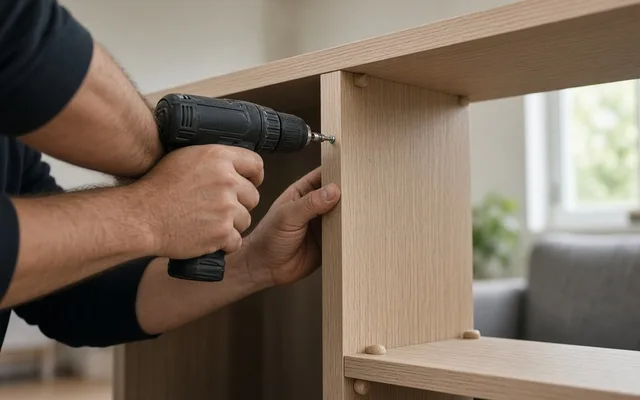 Service guideFurniture Assembly & Mounting
Assembly and mounting covers flat-pack furniture, TV and monitor mounts, floating shelves, mirrors, curtain hardware, and anti-tip anchoring for dressers and bookcases.
Tell us the size, the condition of what is there now, and what you want to change. Home Repair Scopebook passes your request to independent local professionals, who reply with written, no-obligation estimates. The service is free to use.