When you have an uncertain item, what do you do?
No votes yet. Yours will be the first. · saved on this device
Loading...
Home Repair Scopebook · Service guide
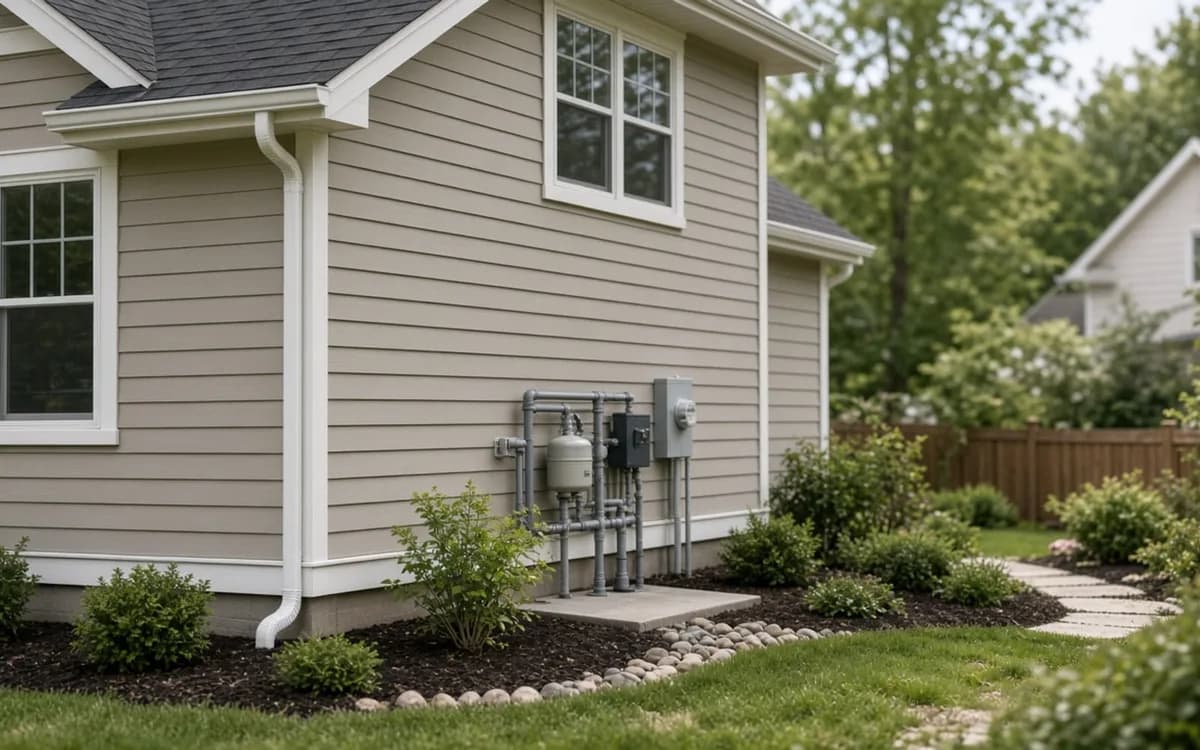
This scope covers minor plumbing and electrical symptoms a homeowner notices first: a dripping faucet, a running toilet, a slow drain, a dead outlet, a wobbling ceiling fan, a light fixture swap. Where local rules allow, a handyman handles like-for-like replacements and adjustments. Anything adding circuits, touching gas, moving drains, or requiring a permit goes to a licensed trade. Describe the symptom and let the qualified pro set the scope.
Plumbing and electrical is the scope where the question is not just what it costs but who is allowed to do it. Rules differ by state and city. Some allow a handyman to replace a faucet or a light fixture like for like; some require a licensed plumber or electrician for anything touching water supply or wiring. California's AB 2622 exemption of $1,000 per project is one model; many states pair a dollar threshold with a separate rule that regulated trades need a license regardless of dollar value.
This page does not tell you what your jurisdiction allows, because that varies. It tells you which symptoms are usually handyman-safe, which are usually not, what each costs according to 2026 data, and how to describe the problem so the matched pro can decide. If the answer is a licensed trade, that is a good outcome; the handyman versus specialist comparison shows what that changes about price and timing.
Want the numbers only? Read the plumbing & electrical cost guide for 2026 ranges, what moves the price, and sample budgets.
| Item | Low | High | Unit | Notes |
|---|---|---|---|---|
| Bathroom faucet replacement | $90 | $300 | per fixture | HomeAdvisor and Angi 2026; product not included |
| Kitchen sink install | $300 | $300 | per fixture | HomeAdvisor 2026 flat figure |
| Toilet or garbage disposal replacement | $150 | $150 | per fixture | HomeAdvisor 2026 flat figure; product not included |
| Ceiling fan on existing wiring | $100 | $300 | per fan | HomeAdvisor 2026; $253 average; new wiring up to $2,000 |
| Hall light fixture swap | $65 | $65 | per fixture | HomeAdvisor 2026 flat figure |
| New outlet behind TV | $210 | $210 | per outlet | HomeAdvisor 2026; typically electrician work |
| Handyperson hourly, small plumbing/electrical | $60 | $130 | per hour | HomeAdvisor 2026 |
Homeowners with a defined, small, like-for-like problem: replace this faucet with that faucet, this switch with that switch, this fixture with that fixture, stop this toilet running, tighten this wobbling fan. HomeAdvisor's per-task list prices a bathroom faucet at about $90, a ceiling fan at $100, a garbage disposal or toilet at $150, and a kitchen sink at $300 through a handyperson, all well under licensed-trade minimums.
It is not the right route when the problem involves new wiring, panel work, gas, drain relocation, water heater replacement, or anything a permit covers. HomeAdvisor's ceiling fan data is the clearest illustration: a swap on existing wiring runs $100 to $300, but if the job needs new wiring the cost climbs toward $2,000 and it becomes electrician work. The same fan, two different trades, depending on what is in the ceiling.
Houzz's 2025 study found 9 in 10 renovating homeowners hired a pro and 49% used specialty providers such as electricians and plumbers. Handymen and trades coexist; the skill is routing the task to the right one.
A rough sort, subject to local rules. Usually handyman: dripping faucet cartridge, running toilet flapper or fill valve, slow bathroom sink drain (P-trap cleanout), showerhead or aerator replacement, like-for-like faucet and toilet replacement, garbage disposal replacement on an existing circuit and drain, light fixture swap, switch or outlet replacement like for like, ceiling fan swap on an existing fan-rated box, doorbell and thermostat replacement.
Usually licensed trade: anything at the panel, new circuits or outlets where none existed, aluminum wiring, GFCI or AFCI issues that trip repeatedly, gas appliances and lines, water heater replacement, main shutoff or pressure regulator work, drains inside walls or under slabs, sewer smell with no obvious source, and any repair a permit covers. When in doubt, describe the symptom in the request form and let the pro classify it. A pro who declines with a reason is the pro you want.
| Symptom | Likely route | Published price | Source |
|---|---|---|---|
| Faucet drips at spout | Handyman (cartridge) | $100–$300 replacement | Angi 2026 |
| Toilet runs intermittently | Handyman (flapper/fill valve) | $150 toilet install | HomeAdvisor 2026 |
| Ceiling fan wobbles or hums | Handyman if box is fan-rated | $146–$360 | HomeAdvisor 2026 |
| Light fixture swap | Handyman, like for like | $65 hall light | HomeAdvisor 2026 |
| New outlet behind TV | Electrician in most areas | About $210 | HomeAdvisor 2026 |
| Breaker trips repeatedly | Electrician | Diagnostic | Local rules |
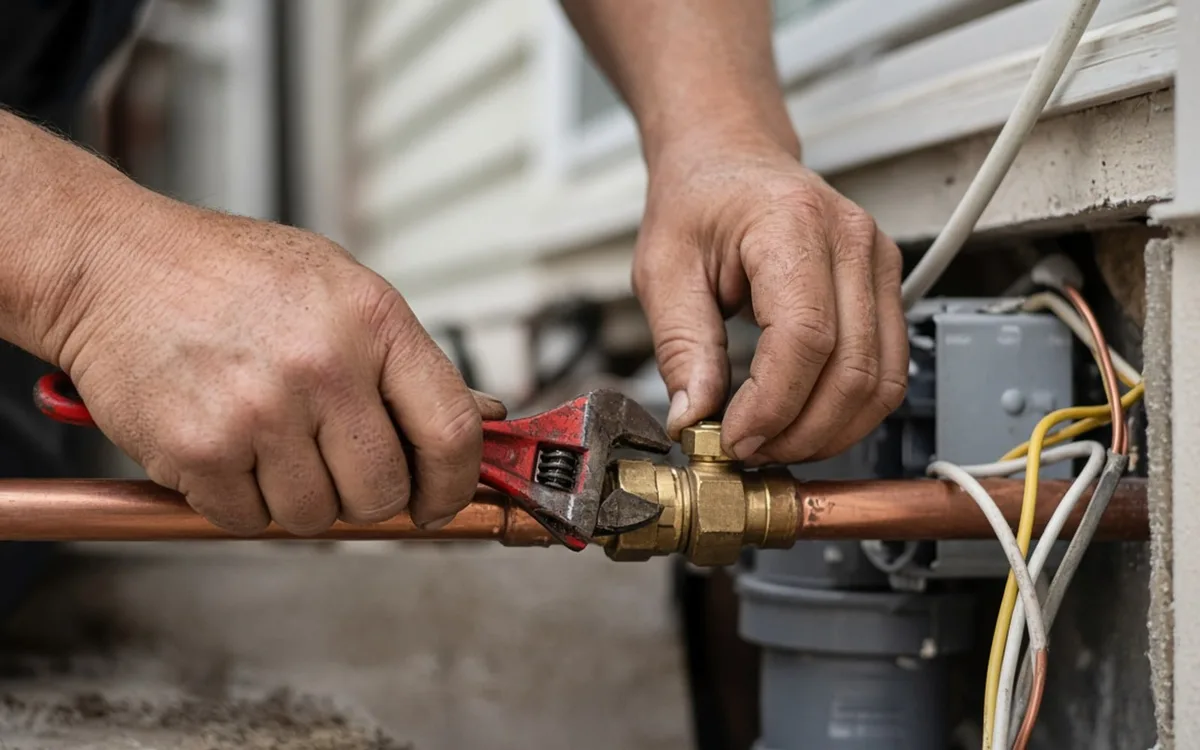
HomeAdvisor's 2026 flat figures run from $65–$300; those are useful because they let you compare a per-job quote to an hourly one. At the hourly rates HomeAdvisor reports, $60 to $125, a faucet swap of 45 to 90 minutes lands in the same range as the flat $90 to $300 figures. Ceiling fan installation averages $253 with a typical range of $146 to $360.
Materials are where these jobs vary. A faucet can be $60 or $600; a fan $80 or $500; a fixture anything. Buy the product yourself where possible to avoid the 10–30% markup Angi reports, but let the pro supply the supply lines, wire nuts, and mounting hardware, which vary with what is found. Ask what happens if the new product does not fit the old rough-in; that return trip is where surprise charges appear.
Symptom, location, frequency, and what you have already tried. "Kitchen faucet drips from the spout about once a second when off; single-handle Moen, about ten years old; I have not opened it." That tells the pro it is probably a cartridge, which brand, and that nothing is disassembled. Do not open equipment or start diagnosing for the inquiry; a half-disassembled faucet makes the job harder to price and sometimes harder to fix.
For electrical, say what the symptom is and when it happens: the outlet is dead, the breaker trips when the microwave and toaster run together, the light flickers when the furnace kicks on. Say whether the house has any known wiring type (aluminum, knob and tube) and its age. Those details often decide the route before anyone arrives. By our analysis of the EIA's 2024 household survey, 10.3% of homes still use no indoor LED bulbs, only 36.7% are all-LED, and 8.6% leave incandescent or halogen outdoor bulbs on all night. Fixture, bulb, and photocell upgrades are cheap adds once a pro is there.
The pro should confirm the water or power is off before opening anything, verify the new product matches the rough-in, do the swap, test under load, and check for leaks after a few minutes rather than immediately. For toilets and disposals, that includes running water long enough to see the drain side. For fans, it includes checking that the box is fan-rated; a standard ceiling box will not hold a spinning fan safely, and installing one is a legitimate reason to stop and re-scope.
Other stop conditions: corroded or non-standard shutoff valves that will not close, aluminum wiring, no ground, scorch marks in the box, or a drain that does not clear after the trap is cleaned. A good pro stops, shows you, and tells you who to call next. Agree in advance that you will pay for time spent up to that point; discovery is work. The general repairs page covers the approval-cap language that makes this routine.
An unpermitted circuit or gas connection can void insurance coverage, fail a sale inspection, and in the worst case start a fire or a leak inside a wall. Less dramatically, a handyman who takes on a job outside their skill often leaves it half done, and the trade you then call charges to undo it before redoing it. Hippo's survey found 58% of DIYers spent more than planned because of mistakes; hiring an underqualified pro produces the same result with a middleman.
The opposite error is overpaying: calling a licensed plumber with a $200 minimum to change a flapper. The fix is the sort described above. Most households have a few items in each category, and one bundled handyman visit plus one trade visit a year covers both.
Substantially. Licensing thresholds run from $1,000 in California, Nevada and Virginia to $10,000 or more in several states, and some cities license handymen separately. Older housing brings galvanized supply lines, cast iron drains, and earlier wiring methods that turn a simple swap into a trade job. The locations page summarizes regional differences; the honest answer is that you should ask the pro what applies at your address and expect a specific answer.
Water quality matters too. Hard-water regions see faster cartridge and valve failure and mineral-clogged aerators; a handyman visit every couple of years to replace the wear items is cheaper than replacing the faucet. Humid regions see more corrosion at exterior outlets and hose bibs.
First confirm both are allowed to do the job. If both are, compare the total including minimums and materials, and then compare what each will do if the job turns out to be bigger. The trade can usually continue; the handyman will have to stop and hand off. For a symptom with an uncertain cause, that continuity can be worth the higher minimum. For a clear like-for-like swap, it rarely is. The quiz has a few questions that test exactly this judgment.
Homeowner polls
No votes yet. Yours will be the first. · saved on this device
No votes yet. Yours will be the first. · saved on this device
Angi reports a 10–30% markup when the pro sources materials.
No votes yet. Yours will be the first. · saved on this device
 Service guideGeneral Home Repairs
General home repairs are the grouped small tasks that keep a house working: sticking doors, loose handrails, failed caulk, cracked trim, wobbly fixtures, weatherstripping, and minor carpentry.
 Service guideFurniture Assembly & Mounting
Assembly and mounting covers flat-pack furniture, TV and monitor mounts, floating shelves, mirrors, curtain hardware, and anti-tip anchoring for dressers and bookcases.
In many jurisdictions, a like-for-like swap on an existing box and circuit is permitted without an electrical license, but not everywhere, and some cities require a permit for any electrical work. Ask the pro what rules apply at your address and expect a specific answer. If the fixture is heavier than the old one, the box may need upgrading, which is where a simple swap becomes something more.
Almost always. The usual cause is a worn flapper or a fill valve set too high, both under $20 in parts and twenty minutes of work. A handyman can also replace the whole toilet like for like; HomeAdvisor lists that at about $150 in labor. If the toilet rocks, the flange or the floor beneath may be damaged, which is where the job can grow. Mention any rocking in the request.
Usually blade imbalance or a loose mounting, both handyman fixes. Sometimes it is a standard ceiling box that was never rated for a fan, which is a safety problem: the box can pull loose. A pro will check the box when they open it. Replacing it with a fan-rated brace box is small work if the ceiling is accessible, but it is beyond a simple tightening and should be re-scoped and approved.
A slow bathroom sink or tub drain that clears with the trap removed or a hand snake, yes. A kitchen drain that backs up repeatedly, a main line backup, or a clog past the trap that needs a powered auger is plumber work, and a sewer smell with no visible cause needs diagnosis. Describe which fixtures are affected; if more than one drains slowly, the problem is downstream and beyond a handyman.
Yes, and confirm it matches the existing hole configuration (single hole, three-hole 4-inch, three-hole 8-inch) before the pro arrives. Bring the old faucet's brand and a photo of the underside if unsure. Buying it yourself avoids the 10% to 30% markup Angi reports on pro-supplied materials. Let the pro bring supply lines, since the old ones are often the wrong length or past their life.
It happens often in older homes; the valves seize. The pro will need to shut off the main and replace the stop valve, which some jurisdictions treat as plumber work. Tell the pro in advance if the valves look old or corroded, and know where your main shutoff is. Replacing a stop valve is a small job but it changes the scope and should be approved before it starts.
Battery and plug-in detectors, yes. Hardwired detectors are a like-for-like swap on an existing circuit that many pros will do, subject to local rules, and interconnected systems need matching units. If the detectors are past ten years old they should all be replaced together. Mention the count and whether they are hardwired; it is a good item to bundle into a visit.
Whether the house has aluminum branch wiring (common 1965 to 1973), knob and tube, or ungrounded two-prong outlets. Each changes what can be safely swapped and often moves the task to an electrician. If you do not know, say the house age; a pro can often tell from the outlet covers and the panel. Never let anyone install a three-prong outlet on an ungrounded circuit without a GFCI or a ground.
 Free toolHandyman cost calculator: price the visit by the hour
Size, material tier and complexity in, a realistic budget range out.
 Free toolWho should do the job? Handyman comparisons with sourced numbers
Side-by-side tables for the decisions that change the price most.
 Free toolHow well do you understand handyman pricing and scope?
10 questions that show what you already know and what to check next.
 Free toolPolls: how other homeowners handle the repair list
See what other planners chose and add your vote.
Tell us the size, the condition of what is there now, and what you want to change. Home Repair Scopebook passes your request to independent local professionals, who reply with written, no-obligation estimates. The service is free to use.