How do you prefer a handyman to price a list?
No votes yet. Yours will be the first. · saved on this device
Loading...
Home Repair Scopebook · Free tools
Four free tools help you plan a handyman visit before requesting estimates: an hourly cost calculator anchored to 2026 published rates with add-ons for minimums, material runs, and after-hours work; comparisons of handyman versus contractor, DIY, and specialist trades; a knowledge quiz on rates and scope limits; and polls that show how other homeowners handle the same decisions. None replace a written estimate.
 Free toolHandyman cost calculator: price the visit by the hour
Size, material tier and complexity in, a realistic budget range out.
 Free toolWho should do the job? Handyman comparisons with sourced numbers
Side-by-side tables for the decisions that change the price most.
 Free toolHow well do you understand handyman pricing and scope?
10 questions that show what you already know and what to check next.
 Free toolPolls: how other homeowners handle the repair list
See what other planners chose and add your vote.
By the numbers
$60–$125 per hour
HomeAdvisor's 2026 hourly handyman rate range, before materials
The spread maps to market and overhead: small markets and bare-bones operators at the low end, insured coastal-metro pros with stocked vans at the top. A quote outside this band deserves a question, not an assumption.
HomeAdvisor, 2026 Handyman Price List (2026)$130
most common handyman minimum charge, per Fixr
The minimum is payable even if a job takes forty minutes. It is the strongest argument for bundling: one minimum spread across six tasks costs a fraction of six separate calls.
Fixr, How much does it cost to hire a handyman? (2025)$406
national average handyman project cost across 103,764 verified projects (2026)
Angi's 2026 guide puts the typical range at $164 to $648 per visit. It is a project total for one or two tasks, not an hourly rate, so a longer bundled list will land above it.
Angi, How Much Does It Cost to Hire a Handyman? [2026 Data] (2026)58%
of DIYers spent more than planned because of mistakes
Hippo's survey of 1,736 homeowners also found 47% underestimated the time and 38% paid $500 or more to repair their own damage. The failures cluster in drywall finishing, painting, and electrical work.
Hippo, The Hidden Cost of DIY survey (2024)The tools on this site do one thing: get you from a vague repair list to a specific request with a plausible budget. They use the same published data as the articles, mainly HomeAdvisor's $60–$125 per hour hourly range, Fixr's $130 most-common minimum, Angi's $406 average project, and Thumbtack's half-day and full-day bands, so a number from the calculator can be checked against the text.
Use them in order if you are starting from scratch: the quiz to see what you already know, the comparisons to decide who to call for each item, the calculator to budget the visit, and the polls to see how other homeowners weighed the same choices. Then the request form.
It multiplies your estimated hours by a mid-market hourly rate, adjusts for whether you or the pro supply materials and for task complexity, and adds flat items such as a minimum charge, a material pickup trip, debris removal, or after-hours premium. The hourly base is set near the middle of the published ranges, and the assumptions are listed under the result.
It does not know your market, your house, or your list. A coastal metro rate can be double a rural one; a plaster wall or a seized valve can double a task's time. Treat the output as the number to compare estimates against, and expect real quotes to land within roughly 30% of it for a well-described list. If they do not, one of you has misread the scope.
When you are unsure who to call. The comparison pages set a handyman against a general contractor, a licensed plumber or electrician, a painter, a DIY attempt, and a fixed-price versus hourly arrangement, with a factor table and a verdict for each. They are built from the same cost guides as the service pages: Fixr's repair bands, HomeGuide's $300–$500 contractor price for a small drywall patch, HomeAdvisor's per-task figures. The most useful is probably DIY versus hire, since Hippo's survey found 58% of DIYers overspent because of mistakes and most people underestimate that risk for their own projects.
Calibration. Ten questions on rates, minimums, scope limits, and what drives price, each with an explanation and a source. Most homeowners get about half right the first time, usually missing the licensing questions and the material markup. It takes five minutes and makes the rest of the site faster to read, because the vocabulary is already in place. The quiz page also links each explanation to the relevant service page.
Because how other homeowners actually behave is useful context that surveys rarely capture at the level of a single decision. The published data says 82% of homeowners have a repair waiting, per Today's Homeowner, and 70% cite saving money as their reason to DIY, per Hippo. The polls ask narrower questions: what is on your list, how do you prefer to be billed, what made you trust a pro. Results are shown after you vote and are not ratings of anyone. The polls page has the full set across five categories.
The calculator gives you the budget and the hours; the comparisons tell you which items belong with which trade; the quiz tells you what to ask; the polls tell you what others prioritized. Put all of that into the request form as a numbered list with photos, priorities, and a regulated-items group, and the estimates that come back will be comparable to each other and to the calculator's number. Angi's national average of $406 is the sanity check for a short list; Thumbtack's day rates are the check for a long one.
Homeowner polls
No votes yet. Yours will be the first. · saved on this device
Hippo found 58% of DIYers spent more than planned because of mistakes.
No votes yet. Yours will be the first. · saved on this device
It is a planning figure built from national published rates, so it is accurate to the extent your market and your list match the national middle. Expect real estimates within about 30% for a well-described list. The biggest sources of error are local rate differences (up to two-to-one between markets) and underestimated hours for diagnosis items.
Copy the number and the assumptions into your request. The calculator does not store results, and pros do not see it; it exists to give you a reference before you read estimates. Including your estimated hours in the request is useful because it tells the pro how you scoped the list and invites a correction if they see it differently.
They try not to be. Several verdicts say a contractor, a licensed trade, or DIY wins for the situation described, and the DIY comparison is candid about where DIY makes sense. The site's interest is a well-scoped request, not a particular outcome. Every figure in the comparisons is attributed to a published source.
The licensing questions are framed around general principles and cite California's $1,000 threshold as an example rather than asserting a rule for every state. Where the answer genuinely depends on location, the explanation says so. The rate and cost questions use national published figures.
No. They reflect visitors to this site who chose to vote, which is not a random sample of homeowners. Use them as a sense of how people planning similar work think, not as statistics. The site's statistics come from named published sources and are attributed in the text.
The calculator, with an honest guess at hours per item. It forces you to list the items and think about complexity, which is most of the value of preparing a request. Then go straight to the contact form with that list.
Yes, with two cautions. Condo associations often restrict what can be done to common elements and may require licensed trades for anything behind walls; check the rules first. Rentals need landlord approval for most work beyond assembly and mounting, and some leases prohibit wall anchoring. The tools price the work the same either way.
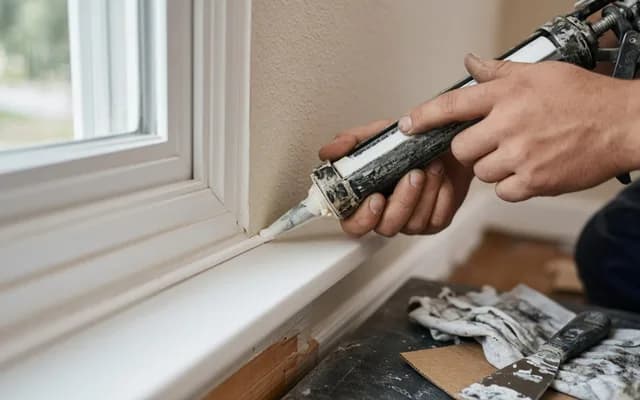 Service guideGeneral Home Repairs
General home repairs are the grouped small tasks that keep a house working: sticking doors, loose handrails, failed caulk, cracked trim, wobbly fixtures, weatherstripping, and minor carpentry.
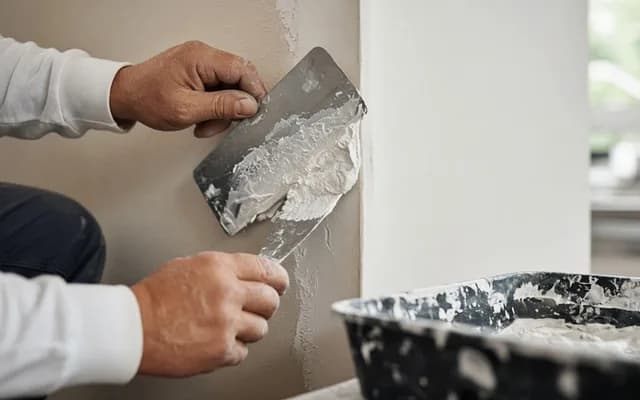 Service guidePainting & Drywall
Painting and drywall work through a handyman covers holes, cracks, water-stained sections, corner bead damage, texture matching, and repainting a wall or room once the cause of the damage is handled.
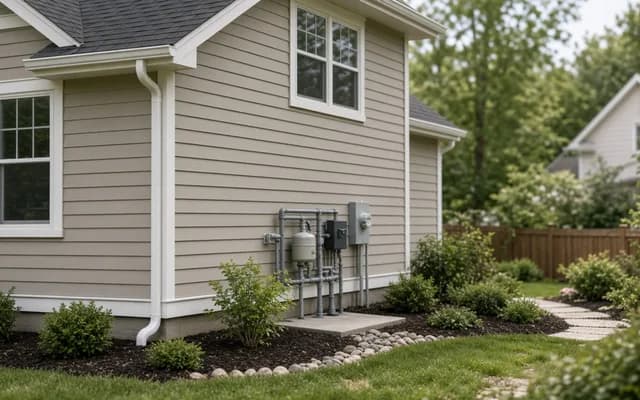 Service guidePlumbing & Electrical
This scope covers minor plumbing and electrical symptoms a homeowner notices first: a dripping faucet, a running toilet, a slow drain, a dead outlet, a wobbling ceiling fan, a light fixture swap.
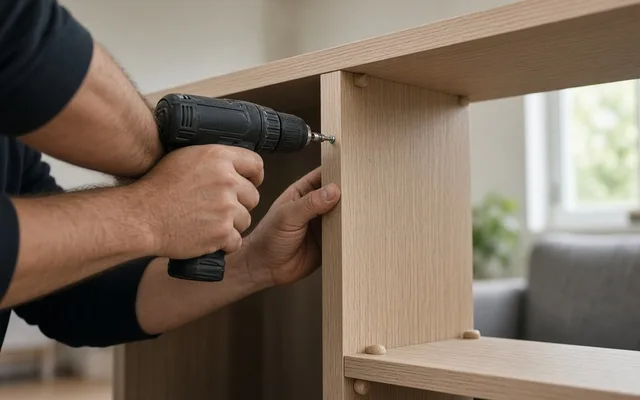 Service guideFurniture Assembly & Mounting
Assembly and mounting covers flat-pack furniture, TV and monitor mounts, floating shelves, mirrors, curtain hardware, and anti-tip anchoring for dressers and bookcases.
Tell us the size, the condition of what is there now, and what you want to change. Home Repair Scopebook passes your request to independent local professionals, who reply with written, no-obligation estimates. The service is free to use.