What is the largest category on your current repair list?
Today's Homeowner found 82% of homeowners have at least one outstanding repair.
No votes yet. Yours will be the first. · saved on this device
Loading...

Home Repair Scopebook · Planning articles
The Home Repair Scopebook blog holds four long-form guides for homeowners with a backlog of small repairs: how to plan and sequence one productive handyman visit, what hourly rates, minimums and per-task prices look like in 2026, which fixtures, anchors, patch compounds and paints to specify, and when a small job crosses into permit or licensed-trade territory. Every figure names its publisher.
 PlanningHow to plan a handyman visit that clears the list in one trip
Plan a handyman visit in five steps: walk the house and write every small repair as its own line, sort the lines into handyman work, licensed-trade work and DIY, photograph and measure each item, decide who buys fixtures and parts, then send the list to two or three pros for written estimates with a stated minimum, a price basis and an approval cap for surprises.
 CostsWhat a handyman costs in 2026, and why two quotes for the same list differ
In 2026 most U.S.
 MaterialsThe materials that decide whether a handyman repair lasts
Most handyman repairs fail at the material, not the labor: a plastic anchor in drywall under a shelf, an unprimed patch that flashes through paint, a latex caulk in a wet corner, or a fan on a box not rated for it.
 PermitsPermits, licensing limits and codes for small home repairs
No, most handyman work needs no permit: painting, patching, assembly, mounting and like-for-like repairs are exempt under the model residential code.
The service pages on this site explain each kind of handyman work on its own terms. The articles cut across all four. One follows a repair list from a scrap of paper to a signed estimate and a finished visit. One sets every published 2026 rate and task price side by side. One explains the products that decide whether a repair lasts, and one covers the licensing and permit lines that decide who is allowed to do the work at all.
They exist because the backlog is common and the knowledge is not. Today's Homeowner's 2025 survey found 82% of homeowners have at least one area waiting on a fix, and Hippo found 83% faced unexpected home repairs in 2024 on top of that list. Most delays come from uncertainty about scope and price, which is exactly what a written plan resolves before anyone is booked.
If you have a list but no idea how to turn it into a visit, start with the planning guide. It explains how to group tasks, photograph them, decide who buys the parts, and write an estimate request that a pro can price without guessing. If the question is purely money, the 2026 handyman cost guide collects hourly rates, minimum charges, half-day and full-day bands, and per-task prices from five publishers, and explains why they differ.
If a pro has asked which faucet, which anchor, or which paint you want, the materials guide explains what each choice changes in labor and lifespan. If you are unsure whether a task is legal for a handyman in your state, or whether it needs a permit, the permits and licensing guide explains the usual triggers and how to check your own jurisdiction.
They assume you own or manage a home, you have more than one small repair waiting, and you would rather understand the work than hand over a blank check. They do not assume you want to do the work yourself, though each guide notes where DIY is sensible. They also assume you are cost-conscious for a reason: Harvard JCHS reports average owner maintenance spending hit a record $1,200 per homeowner in 2023, up sharply since 2019.
None of the guides assumes a specific pro or company. Home Repair Scopebook is a planning and matching resource, not a handyman business, so the articles describe what a fair estimate looks like rather than selling one. When a guide says a price is typical, it names the publisher that reported it, so you can check the figure against the original page and against the written quotes you receive.

Price figures come from the 2025 and 2026 editions of Angi, HomeAdvisor, Fixr, HomeGuide and Thumbtack cost guides. Market and household figures come from IBISWorld, the Bureau of Labor Statistics, Harvard's Joint Center for Housing Studies, the Energy Information Administration's 2024 Residential Energy Consumption Survey, and homeowner surveys by Houzz, Hippo and Today's Homeowner. Each number appears with its publisher in the sentence, and a superscript link points to the source page.
Cost guides describe national averages built from very different data: Angi reports $406 from verified projects, HomeAdvisor reports $390, and Fixr's hourly mode is $65/hr. Where the sources disagree, the articles show the spread rather than averaging it away, because the spread is often the useful part: it tells you how much your own market, house and list can move a price.
The articles explain the reasoning; the tools apply it to your list. The handyman cost calculator takes hours, a material tier, a complexity level and common add-ons such as a minimum charge or a store run, and returns a planning range. The cost guide explains where those defaults come from, so you can tell when your situation sits outside them, for example in an expensive metro or an older house that needs diagnosis before repair.
The quiz tests the facts the permits and cost guides cover, such as what a licensing threshold includes and why the minimum charge favors bundling. It takes a few minutes and is a quick way to find the gaps in what you know before you talk to a pro. The polls show how other homeowners answered practical questions about pricing preference and who buys the parts.
Write the list. The single most useful output of any of these guides is a numbered list of tasks, each with a photo, a location, the product if one is needed, and a note on anything uncertain. Thumbtack reports a typical full-day handyman project at $701–$1,105, priced as one block of time; the list is what makes those work, because it is what lets one minimum charge cover six tasks instead of one.
Then decide which items are clearly handyman work, which might need a licensed trade, and which you will do yourself. Once that is settled, the estimate request form passes the list to independent local pros for free written estimates, with no obligation. The articles will still be useful afterward, when two estimates arrive priced in different ways and you need to compare them fairly.

Homeowner polls
Today's Homeowner found 82% of homeowners have at least one outstanding repair.
No votes yet. Yours will be the first. · saved on this device
No votes yet. Yours will be the first. · saved on this device
No votes yet. Yours will be the first. · saved on this device
No. They are written for U.S. homeowners in general, and each one flags where state or local rules change the answer, especially the permits guide. Licensing thresholds, permit exemptions and trade rules differ by state and often by city or county, so treat any state example, such as California's handyman limit, as an illustration and confirm the rule for your own address with the state licensing board or local building department.
The figures are refreshed when the cited publishers release new editions of their cost guides or surveys, which for Angi, HomeAdvisor and HomeGuide is usually at least once a year. Each figure carries its publisher and year, so you can see how current it is. If a quote you receive is well outside a cited range, check the source page for a newer figure before assuming the quote is wrong.
No. If your list is short and clearly handyman work, the planning guide alone is enough to write a request that gets a fixed price. Read the cost guide if you want to sanity-check quotes, the materials guide if you are buying parts yourself, and the permits guide only if a task touches wiring, plumbing supply or drains, structure, or anything a building department might regulate.
Because each publisher measures something slightly different. Angi's average is built from verified projects, HomeAdvisor's from homeowner-reported costs, Fixr's from contractor pricing, and Thumbtack's from its marketplace. Showing them side by side gives a realistic band instead of false precision. When two sources agree closely, as Angi and HomeAdvisor do on a one-or-two-task visit, the overlap is a reasonable anchor for your own expectations.
They can tell you the published range and what pushes a job toward either end of it, which is usually enough to judge whether a quote is reasonable. They cannot see your wall, your wiring or your local labor market. A written estimate from a pro who has seen photos of the task is the only number you should budget against, and the guides explain how to ask for one.
Yes. The planning guide helps you split a list into DIY items and hired items, and the materials guide explains the products either way. Hippo's DIY survey found most DIYers overspent because of mistakes, so the guides are candid about which tasks are forgiving, such as assembly and caulking, and which punish small errors, such as drywall finishing, paint over patches and anything electrical.
Not a separate one. Emergencies such as an active leak, a sparking outlet or a gas smell belong with a licensed plumber, electrician or utility, not a scheduled handyman visit, and the permits guide explains why. The cost guide notes that after-hours handyman labor is billed at a premium. The planning approach in these articles is aimed at the non-urgent backlog, where time to plan saves real money.
 Service guideGeneral Home Repairs
General home repairs are the grouped small tasks that keep a house working: sticking doors, loose handrails, failed caulk, cracked trim, wobbly fixtures, weatherstripping, and minor carpentry.
 Service guidePainting & Drywall
Painting and drywall work through a handyman covers holes, cracks, water-stained sections, corner bead damage, texture matching, and repainting a wall or room once the cause of the damage is handled.
 Service guidePlumbing & Electrical
This scope covers minor plumbing and electrical symptoms a homeowner notices first: a dripping faucet, a running toilet, a slow drain, a dead outlet, a wobbling ceiling fan, a light fixture swap.
 Service guideFurniture Assembly & Mounting
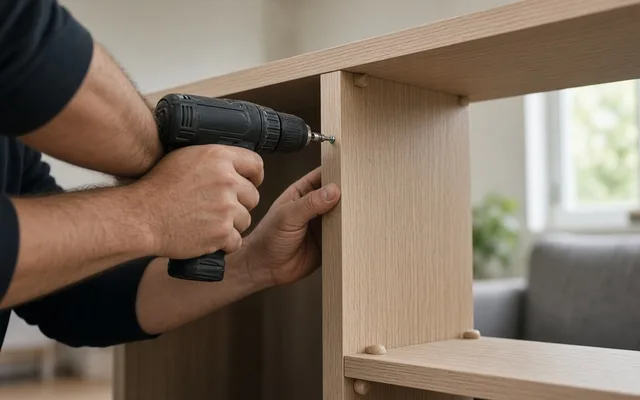
Assembly and mounting covers flat-pack furniture, TV and monitor mounts, floating shelves, mirrors, curtain hardware, and anti-tip anchoring for dressers and bookcases.
 Free toolHandyman cost calculator: price the visit by the hour
Size, material tier and complexity in, a realistic budget range out.
 Free toolWho should do the job? Handyman comparisons with sourced numbers
Side-by-side tables for the decisions that change the price most.
 Free toolHow well do you understand handyman pricing and scope?
10 questions that show what you already know and what to check next.
 Free toolPolls: how other homeowners handle the repair list
See what other planners chose and add your vote.
Tell us the size, the condition of what is there now, and what you want to change. Home Repair Scopebook passes your request to independent local professionals, who reply with written, no-obligation estimates. The service is free to use.