What most often surprised you on a handyman invoice?
No votes yet. Yours will be the first. · saved on this device
Loading...

Home Repair Scopebook · Glossary
This glossary defines the terms that appear on handyman estimates, invoices and product labels: pricing terms such as minimum charge, trip fee, day rate and approval cap; legal terms such as licensing threshold and like-for-like swap; and material terms such as fan-rated box, snap toggle, texture matching, flashing and tip-over restraint. Knowing them makes estimates easier to compare and disputes easier to avoid.
Handyman estimates are short, and a lot of meaning sits in a few words. 'Minimum applies', 'parts at cost plus', 'like-for-like only' and 'approval required above $X' each change what you will pay and what the pro will do. The terms listed below are the ones that come up most on small-repair lists.
The sections that follow explain how to use the terms when reading a proposal, which pairs of terms get confused, and which questions each term helps you ask. The definitions themselves are short; the context is where they become useful. The 2026 cost guide puts the pricing terms into numbers.
Read an estimate in four passes, each tied to a group of terms. First, the pricing basis: is it per task, hourly or a day rate? Second, the floor: what is the minimum charge, and is it credited against the work? Third, materials: which items are owner-supplied, which are pro-sourced, and at what markup? Fourth, surprises: is there an approval cap, and what hourly rate applies to unlisted work?
If an estimate does not use one of these terms, ask about it anyway. A missing minimum charge may mean it is built into each task price. A missing approval cap usually means every surprise will be a phone call or an unapproved invoice line. Angi reports a materials markup of 10–30%, so a missing materials line is worth a question too.
Minimum charge and trip fee are often confused. The minimum is the smallest amount billed for any visit; Fixr reports $130 as most common. A trip fee is a separate charge for leaving the job to buy materials, or for travel outside the service area. You can avoid a trip fee by having parts on site; you cannot avoid a minimum except by filling it with work.
Day rate and fixed price are also confused. A day rate fixes the price of time, not the amount of work; Thumbtack reports $701–$1,105 for a full day, and some items may not be reached. A fixed price fixes the price of defined tasks. Licensing threshold and permit exemption are a third pair: one is a state limit on who may do the work, the other a local rule on whether the work needs review. A task can be exempt from permits and still exceed the threshold.
| Often confused | The difference |
|---|---|
| Minimum charge vs trip fee | Floor for any visit vs charge for a store run or distance |
| Day rate vs fixed price | Price of time vs price of defined tasks |
| Licensing threshold vs permit exemption | Who may do it vs whether it needs review |
| Like-for-like swap vs new installation | Existing connections vs added or moved systems |
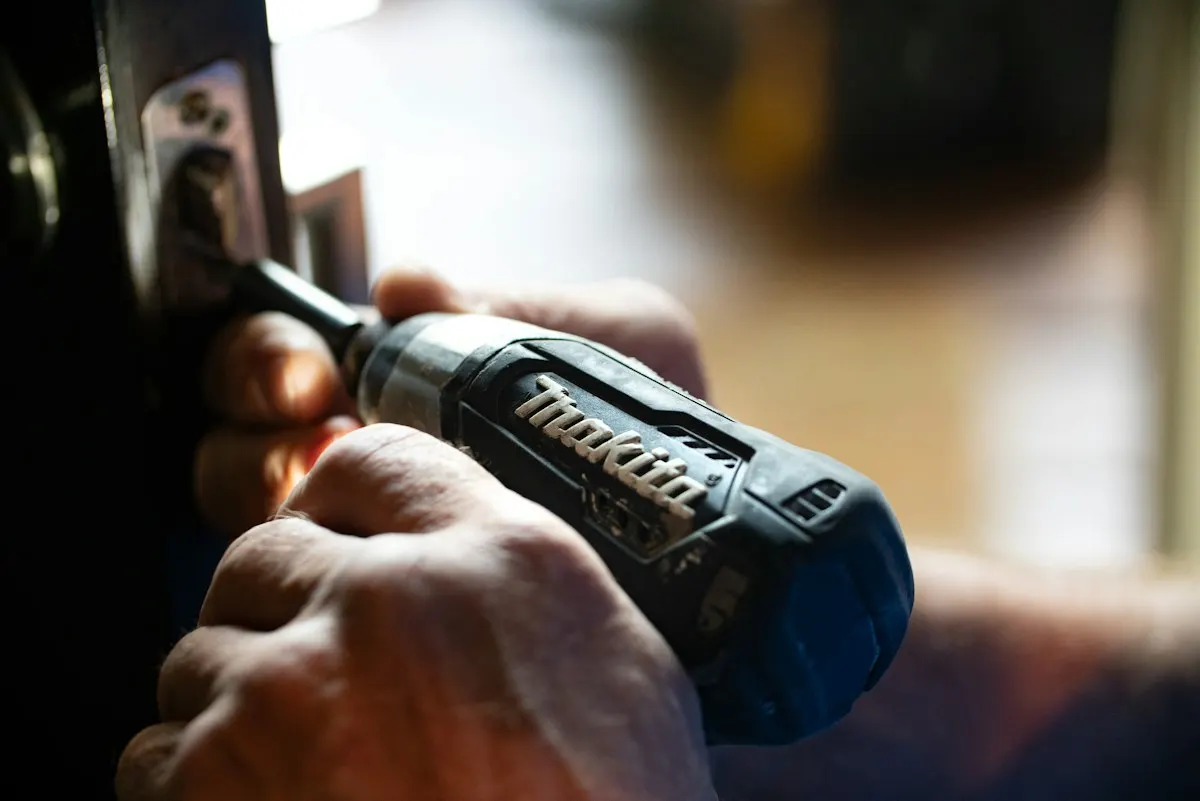
Material terms turn vague worries into specific questions. 'Is the ceiling box fan-rated?' tells you whether a fan swap is short or needs re-scoping. 'Will you use snap toggles or find studs?' tells you whether a shelf will hold books. 'Will the patch be primed before painting?' tells you whether you will see flashing later. 'Can you match the texture?' tells you whether the patch will disappear.
The same terms help when comparing two pros. If one estimate mentions texture matching and priming and the other does not, the price difference may simply be the cost of doing the patch properly. HomeAdvisor's drywall repair average of $612 reflects that finishing work. The painting and drywall guide and the mounting guide show these terms in context.
Some charges surface only at the end, and the terms on the invoice are the clue. 'Trip charge' or 'material run' means the pro left to buy something; HomeGuide reports $30 to $80 for it, on top of minimums of $75–$200. 'Disposal' or 'haul-away' covers packaging and old fixtures. 'Return visit' covers a second trip for drying time or a missing part. 'After-hours' or 'premium time' covers work outside normal hours, which Fixr reports at $90 to $200 an hour.
None of these is improper if it was agreed in advance. The practical defense is to ask about each one before the visit and have the answer written into the estimate, so the invoice holds no new vocabulary. The planning guide explains how to write a request that settles these questions up front.
Two terms carry legal weight. Licensing threshold is the job value above which a state requires a contractor license; California's is $1,000, labor and materials combined, and other states differ. Like-for-like swap describes the narrow category of plumbing and electrical work that a handyman may do in many places, replacing a fixture on existing connections without adding or moving anything.
One term carries safety weight: tip-over restraint. Falling furniture is a documented hazard, and the federal STURDY rule requires stability features on new clothing storage units. Ask any pro assembling tall furniture to install the restraint into a stud or rated anchor. The permits and licensing guide explains the legal terms in more depth.

Homeowner polls
No votes yet. Yours will be the first. · saved on this device
No votes yet. Yours will be the first. · saved on this device
It means the pro will charge the retail cost of parts plus a percentage markup, which Angi reports is typically 10% to 30%. It covers shopping time, returns and the risk of buying the wrong part. It is a fair practice when stated in advance. Ask for the percentage in writing, and consider supplying branded fixtures yourself to avoid it.
It is a ceiling on the total for hourly work: the pro bills actual time up to that amount and must get your approval to go beyond it. It combines the fairness of hourly billing for uncertain tasks with the budget certainty of a fixed price. It works best alongside a time estimate for each task on the list.
A punch list is a list of small outstanding items, originally the last tasks on a construction project before final payment. Homeowners use the term for their own list of small repairs. Written well, with locations, photos and desired outcomes, a punch list is the single most useful document for getting an accurate handyman estimate.
Rough-in is the stage of plumbing or electrical work where pipes, boxes and wires are installed inside walls before they are closed up. In permitted work, a rough-in inspection happens before drywall goes back. If your list includes patching over new wiring or plumbing, the patch must wait until that inspection is passed.
Finish levels describe how smooth a drywall surface is, from taped-only up to a full skim coat. Most painted walls use a middle level; walls under raking light or gloss paint need a higher one. When a pro or painter mentions a finish level, ask which one they are quoting, since higher levels take substantially more labor.
It means you bought the product and the pro installs it. Many pros will warranty their labor but not the product, and if an owner-supplied part fails or is defective, the manufacturer's warranty applies. Keep receipts and manuals. If a supplied product is incompatible or damaged, the pro may stop and bill for time spent.
The full list of defined terms appears on this page below the sections, drawn from the site's reference content. Each definition is one or two sentences. If a term on your estimate is not listed, ask the pro to explain it in writing, and use the quiz and the cost guide to check how it affects price.
 Service guideGeneral Home Repairs
General home repairs are the grouped small tasks that keep a house working: sticking doors, loose handrails, failed caulk, cracked trim, wobbly fixtures, weatherstripping, and minor carpentry.
 Service guidePainting & Drywall
Painting and drywall work through a handyman covers holes, cracks, water-stained sections, corner bead damage, texture matching, and repainting a wall or room once the cause of the damage is handled.
 Service guidePlumbing & Electrical
This scope covers minor plumbing and electrical symptoms a homeowner notices first: a dripping faucet, a running toilet, a slow drain, a dead outlet, a wobbling ceiling fan, a light fixture swap.
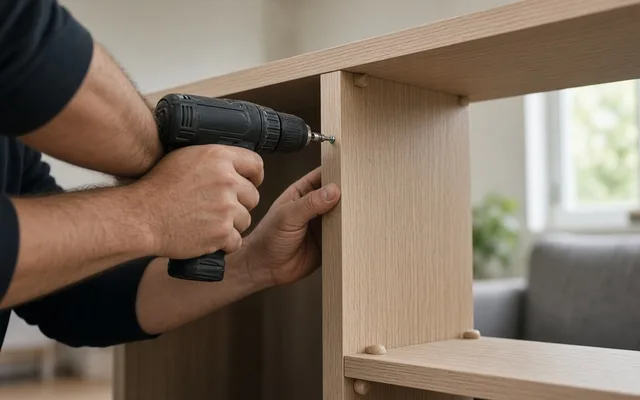 Service guideFurniture Assembly & Mounting
Assembly and mounting covers flat-pack furniture, TV and monitor mounts, floating shelves, mirrors, curtain hardware, and anti-tip anchoring for dressers and bookcases.
 Free toolHandyman cost calculator: price the visit by the hour
Size, material tier and complexity in, a realistic budget range out.
 Free toolWho should do the job? Handyman comparisons with sourced numbers
Side-by-side tables for the decisions that change the price most.
 Free toolHow well do you understand handyman pricing and scope?
10 questions that show what you already know and what to check next.
 Free toolPolls: how other homeowners handle the repair list
See what other planners chose and add your vote.
Tell us the size, the condition of what is there now, and what you want to change. Home Repair Scopebook passes your request to independent local professionals, who reply with written, no-obligation estimates. The service is free to use.