How do you prefer a handyman to price a list?
No votes yet. Yours will be the first. · saved on this device
Loading...

Home Repair Scopebook · Hourly rate vs Fixed price per task or visit
Fixed prices suit tasks that are fully visible, photographed and have parts on hand, because the pro carries the time risk. Hourly pricing suits diagnostic or uncertain work, where a fixed price would be padded, because you carry the time risk. Most good estimates mix both: fixed prices for clear tasks, hourly for uncertain ones, a stated minimum, and a written approval cap for surprises.
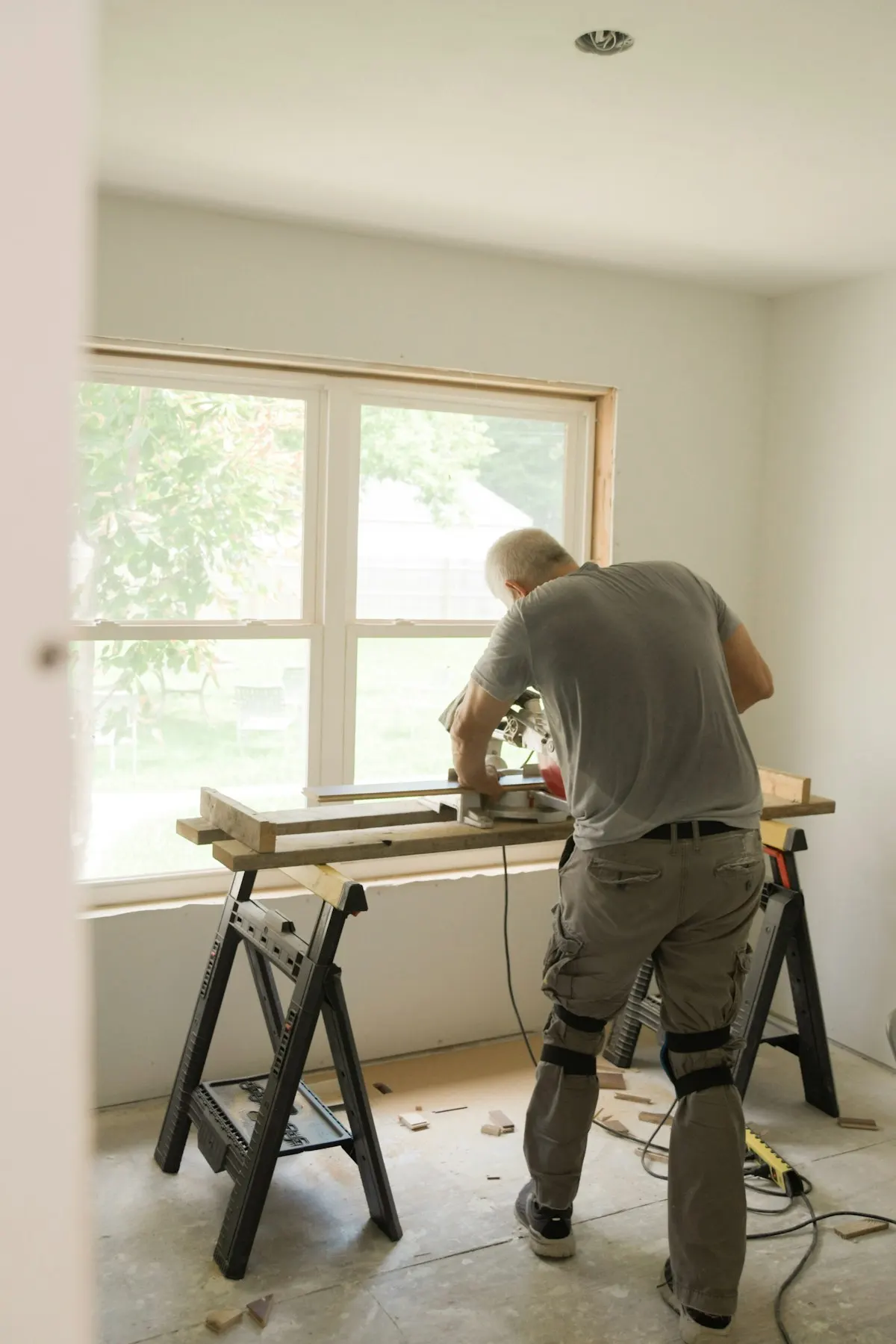
Photo: Renovations Certified · License.
Every handyman quote answers the same question differently: who pays if the job takes longer than expected? Under a fixed price, the pro does. Under an hourly rate, you do. Neither is inherently fairer; each is fair for a different kind of task, and the wrong structure for a task is what produces overpriced quotes and disputed invoices.
This page covers the scenarios that suit each structure, what the published rates and day bands imply, how minimums and approval caps fit in, the mistakes that cause disputes, and how to compare an hourly quote with a fixed one. The cost calculator uses an hourly model, and the 2026 cost guide explains the rates behind it.
Hourly suits uncertain, diagnostic lists and shifts efficiency risk to you; fixed prices suit photographed, parts-on-hand tasks and shift the risk to the pro. The best estimates mix both with a stated minimum and an approval cap.
| Factor | Hourly rate | Fixed price per task or visit |
|---|---|---|
| Published range | $60–$125/hr (HomeAdvisor); $65 most common (Fixr) | $65–$300 per task (HomeAdvisor); $316–$428 half day (Thumbtack) |
| Who carries efficiency risk | You | The pro |
| Best for | Diagnosis, unknowns, old houses | Defined swaps, patches, assembly |
| Minimum charge | Often a higher first hour | Built into the task price |
| Surprises | Continue on the clock with a cap | Re-scope and re-price |
| Comparability | Hard across pros | Easy across pros |
| Transparency | Requires trust in time tracking | Known in advance |
Fixed pricing wins for the items you can photograph and supply parts for, which should be most of a well-prepared list. It makes estimates comparable and removes the incentive to work slowly. Thumbtack's half-day and full-day bands function as fixed prices for typical lists and are the benchmark.
Hourly wins for the uncertain items, with a rate stated, a cap set, and an agreement on what triggers a call. Asking for fixed prices on the defined tasks and capped hourly on the rest is the arrangement this site recommends everywhere; the general repairs page gives the wording.
A task suits a fixed price when the pro can see everything that affects the time from photos or a quick visit: assembling a specific product, mounting a TV on a known wall type, swapping a faucet on working valves, patching a measured hole, hanging a door that is already sized. HomeAdvisor's 2026 list of flat task prices, $65–$300, shows how routinely these jobs are priced per task. Angi's and Fixr's 2026 task tables list similar jobs the same way, so fixed pricing for them is normal practice rather than a special request.
Fixed prices protect you from a slow day and make budgets simple. The trade-off is a small premium: the pro builds in a margin for the variation they are absorbing. For a task that genuinely varies little, that margin is small. Ask for fixed prices on every item where the scope is clear, and give the pro the photos and product details that let them quote without padding.
Hourly suits work where the cause or extent is unknown: a door that sticks for reasons not yet found, a leak with no obvious source, a squeaky floor, a wall that may be plaster or drywall, an older house where every fixture might hide a surprise. A fixed price on these jobs has to cover the worst case, so you pay for trouble that may not appear. Hourly lets you pay only for the time actually used.
HomeAdvisor's 2026 hourly range is $60–$125 per hour, and Fixr's most common rate is $65/hr. Hourly pricing works best with a time estimate per task, a not-to-exceed figure, and a request to call before going past it. Without those, the risk of an open-ended bill sits entirely with you. The pricing preference poll shows how other homeowners weigh that risk against the premium built into fixed prices.

A day rate is a middle path: a fixed price for time rather than for tasks. Thumbtack reports full-day handyman projects at $701–$1,105, and half days of two to five hours at $316 to $428. A day rate suits a long priority-ordered list where you want as much done as possible and accept that the last items may not be reached. Put the list in priority order and ask the pro to note, at the end of the day, which items remain and how long each would take.
Minimums apply to both structures. Fixr's most common minimum is $130 and HomeGuide reports $75–$200, often structured as a higher first hour. Under hourly pricing the minimum sets the floor; under fixed pricing it is usually built into each task, which is why single-task fixed prices look high compared with the same task inside a bundle. Asking for fixed prices on a bundled list, rather than on single tasks, is how you get per-task prices that reflect the shared minimum.
| Structure | Who carries time risk | Suits |
|---|---|---|
| Fixed price per task | The pro | Clear, photographed tasks with parts on hand |
| Hourly with estimate | You | Diagnostic, older-house or uncertain tasks |
| Day or half-day rate | Shared | Long lists done in priority order |
| Mixed with approval cap | Split by task | Most real repair lists |
An approval cap is a written dollar figure below which the pro may handle small unlisted problems without calling, and above which they must stop and ask. It matters because surprises are routine: Hippo's Housepower report found 83% of homeowners faced unexpected repairs in 2024. Without a cap, every surprise is either a phone call that stalls the day or an invoice line you did not approve.
Under fixed pricing, the cap covers work outside the fixed tasks. Under hourly pricing, it covers time beyond the estimate. In both cases, write the hourly rate for unlisted work into the estimate. The poll on invoice surprises shows that unexpected additions are among the most common complaints, and the cap is the simplest way to prevent them. A cap of a modest amount covers most small surprises, such as a replacement supply line or an extra anchor, without stalling the visit.
Under fixed pricing, disputes come from scope drift: the fixed price covered swapping a faucet, but the valves failed, and the pro and homeowner disagree about whether valves were included. The fix is a scope line that says what is and is not included, and what happens if a connected part fails. Under hourly pricing, disputes come from time that seems excessive, often store runs, breaks or slow diagnosis that was not explained.
Both are avoided by writing more down. For fixed prices, list exclusions. For hourly, ask for a time estimate per task, a note of any trip or materials fees, and a daily summary of hours if the job runs more than a day. The cost guide lists the hidden charges that most often appear on handyman invoices. Reading it before accepting any quote makes the missing lines on an estimate easy to spot.
Many households now book a handyman on a schedule rather than when something breaks. Angi's State of Home Spending report found households spent $2,041 on maintenance in 2025, and two or three planned visits a year is a practical way to spend part of that. For recurring visits, a half-day or day rate with a standing priority list often works better than per-task pricing, because the list changes each time.
Over time, a pro who knows the house works faster, which makes hourly or day-rate pricing more attractive with each visit. Ask for a standing rate, a stated minimum and a running list the pro can see before arriving. Keep fixed prices for any one-off job in the middle of a visit, such as a new fixture, so it is clearly priced. The general repairs cost guide shows how to budget each visit.
Convert both to an expected total. For the hourly quote, multiply the pro's own hour estimate by the rate, add any minimum or trip fee, and add materials at the stated markup. For the fixed quote, add the task prices and any materials. Then add a realistic allowance for surprises to the hourly total only, since the fixed quote already contains one.
If the totals are close, choose the structure that fits the list: fixed for clear tasks, hourly for diagnostic ones. If the fixed quote is much higher, it may be padded for uncertainty you could reduce with better photos; ask the pro which items drove the price. If the hourly estimate seems low, ask how they arrived at the hours. When you are ready, the estimate request form lets you ask for either structure, or a mix.
Homeowner polls
No votes yet. Yours will be the first. · saved on this device
No votes yet. Yours will be the first. · saved on this device
Usually because the request lacked photos, parts, or detail, so every item looks uncertain. Add those and ask again. A pro who still refuses to fix-price a photographed door adjustment is asking you to carry all the risk, which is a reason to compare with someone who will.
It is a fixed price for time rather than for tasks: you buy the day, and the list gets done in priority order. Thumbtack reports $701 to $1,105 for full days. It suits long lists and works best when you keep a few extra low-priority items ready in case the pro finishes early.
It depends on the estimate, so read the wording. Some fixed prices cover labor only, with you supplying the product; others include standard materials and consumables; a few include the fixture itself. Ask for the materials line to be explicit, including who buys what and at what markup. A fixed price that silently excludes materials can look cheaper than an hourly quote that includes them.
You can ask, and some pros will agree for the remaining clear tasks once they have seen the conditions. It is harder to convert an in-progress diagnostic task, because the uncertainty is what made it hourly. Agree any change in writing, even as a text message, so both sides know which tasks are billed which way when the invoice arrives.
Each pro prices in their own speed, overhead, travel, minimum and risk tolerance. One may assume the valves will work and another may assume they will not. Market rates also differ, which Thumbtack's data shows ranges from about $45 to $125 an hour. Ask each pro what the price assumes, and compare their assumptions rather than just the totals.
Yes. A not-to-exceed figure turns an open-ended hourly quote into a capped one, and most professional pros are comfortable providing it with a condition that they will call before going over. It works best alongside a per-task time estimate, so you can see where the time is expected to go and which items to drop if the day runs long.
Practices vary. Many pros do not bill breaks and lunch, some bill travel for a mid-job store run as a trip fee, and a few bill all time on site. Ask before the visit and have the answer written into the estimate. Buying specified parts in advance removes most store runs, and HomeGuide notes a trip fee of $30 to $80 when one is needed.
 ComparisonHandyman vs General contractor
Hire a handyman for small, unpermitted tasks within your state's licensing limit, such as repairs, patching, painting, assembly and like-for-like swaps.
 ComparisonHandyman vs Licensed plumber or electrician
A handyman is usually faster and cheaper for like-for-like swaps and simple adjustments where local rules allow, such as a faucet on existing valves, a light fixture on an existing box, or a running toilet.
ComparisonHandyman for patch and paint vs Dedicated painter or drywall contractorA handyman is usually the better fit for a few patches, one wall or a small room inside a bundled visit, because the minimum charge is lower and the patch can share it with other tasks.
ComparisonDo it yourself vs Hire a handymanDo it yourself when the task is cheap, forgiving and needs tools you already own, such as assembly, caulking, a showerhead or a battery smoke alarm.
 Service guideGeneral Home Repairs
General home repairs are the grouped small tasks that keep a house working: sticking doors, loose handrails, failed caulk, cracked trim, wobbly fixtures, weatherstripping, and minor carpentry.
 Service guidePainting & Drywall
Painting and drywall work through a handyman covers holes, cracks, water-stained sections, corner bead damage, texture matching, and repainting a wall or room once the cause of the damage is handled.
 Service guidePlumbing & Electrical
This scope covers minor plumbing and electrical symptoms a homeowner notices first: a dripping faucet, a running toilet, a slow drain, a dead outlet, a wobbling ceiling fan, a light fixture swap.
 Service guideFurniture Assembly & Mounting
Assembly and mounting covers flat-pack furniture, TV and monitor mounts, floating shelves, mirrors, curtain hardware, and anti-tip anchoring for dressers and bookcases.
 Free toolHandyman cost calculator: price the visit by the hour
Size, material tier and complexity in, a realistic budget range out.
 Free toolHow well do you understand handyman pricing and scope?
10 questions that show what you already know and what to check next.
 Free toolPolls: how other homeowners handle the repair list
See what other planners chose and add your vote.
Tell us the size, the condition of what is there now, and what you want to change. Home Repair Scopebook passes your request to independent local professionals, who reply with written, no-obligation estimates. The service is free to use.